Does one have to be vegetarian to practice yoga? - Mr. Sudhakant Mishra
Practice summary
- Video length
- 2:37
To practice yoga, one has to practice yoga, one has to follow the natural rules if you have to get the benefit from the nature, follow the nature. This is the requirement of the yoga. It is not necessary that you have to be vegetarian, then only you will practice. But it is better if you follow the rules of the nature, because yoga means that you have to unite. Yoga means you have to unite the body with the mind, mind with the soul, soul with the superconscious. So if you are practicing yoga, it is better to practice the natural rules. There is no harm if you are non-vegetarian and if you are practicing yoga. It is not like it harms you. But if you are looking at better result, if you are looking a meditation and all, one should eat a very satwik food. Satwik food means that the source of the food is a very pious. It is not that you are harming someone and then you are eating, because in yoga, Patanjali has given the 8 limbs of the yoga. Yoga is not only the asanas and the pranayama. In the 8 limbs of the yoga, one is the M-Niyam, then aasan, pranayama, pratyahar, dharana, dhyan and Samadhi. So once we focus on the M- means what we have to avoid. So one part is there, that is ahimsa. Ahimsa means that one should not hurt anybody, through the word, through action, through their benefit, one should not harm anybody. This is one of the prime requirement. That is why it is better if you be a vegetarian because once you are practicing meditation, that time if you are eating a non-veg. so that creates too much of a heat in the body and that heat will impact your meditative level. You will not be able to focus, you will not be able to do the mediation properly. That is why one should eat vegetarian food if you have to get the proper benefit of yoga.
More practice
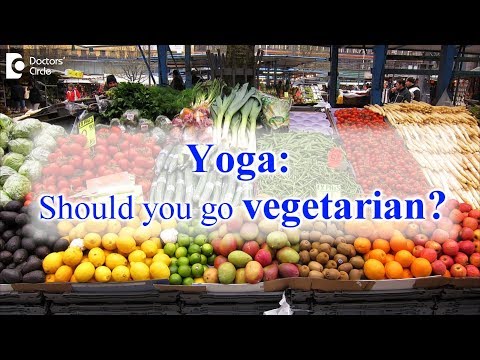 Should I be vegetarian for best results in Yoga? - Mr. Sudhakant MishraDoctors' Circle World's Largest Health Platform · 2:28
 14-15 🕉️ Yama and Niyama in Ashtanga Yoga vs The Protocols of Computer ScienceDheer Singh Yadav · 3:37
 200 Hour Yoga Teacher Training - Enough?Samyak Institute of Yoga & Ayurveda · 4:57
 5 Tips For Creating A Consistent Meditation PracticeBeing Integrated · 9:33
 Cultural Appropriation of YogaStaci Alden · 26:57
 Do I have to be Vegetarian or Vegan to practice Yoga? Yoga Upload Q & AYOGA UPLOAD with Maris Aylward · 6:30