Chapters
Half Standing Forward Bend (Ardha Uttanasana) - Yoga Pose Tutorial by Muscle and Motion
Practice summary
- Level
- all levels
- Video length
- 3:29
- Equipment
- Energy
- balancing
- Target areas
In this practice
Key teachings
- Correct anatomical alignment in yoga poses
- Understanding muscle activation for safe and effective practice
- Identifying and addressing common postural imbalances
- Importance of a neutral spine in forward folds
Ideal for
- Beginner yoga practitioners
- Individuals refining their Ardha Uttanasana alignment
- Those with tight hamstrings or back stiffness
- Students interested in the anatomical aspects of yoga
Lesson
Instructions
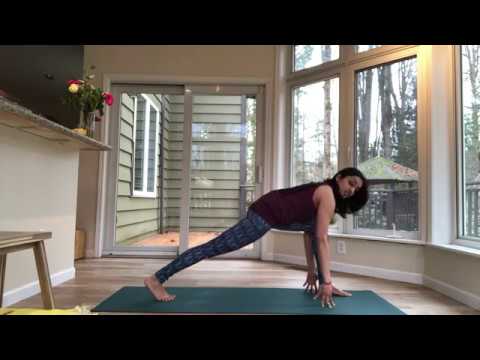
Welcome to Muscle and Motion's Yoga Pose Tutorial series! In this episode, we'll guide you through the Half Standing Forward Bend, also known as Ardha Uttanasana. This yoga pose offers a fantastic stretch for your hamstrings, strengthens your back, and enhances overall flexibility.
🧘♀️ Yoga Pose: Half Standing Forward Bend (Ardha Uttanasana) 🔥 Target Muscles: Hamstrings, Erector Spinae, Trapezius, Deltoids, Rhomboids, Quadriceps Femoris, Gluteus Maximus.
✅ The correct alignment for Half Standing Forward Bend ✅ Key muscle groups engaged during the pose ✅ How to maintain a straight, elongated back ✅ Proper hand placement and gaze direction ✅ Tips for preventing common mistakes
WANT EXCLUSIVE VIDEOS NOT FOUND ON YOUTUBE? Try Muscle and Motion’s apps today on all devices! Strength app - www.muscleandmotion.com/products/strength-training-app/ Posture app - www.muscleandmotion.com/posture/ Anatomy app - www.muscleandmotion.com/products/muscular-anatomy-app/ Yoga app - www.muscleandmotion.com/products/yoga-functional-anatomy-app/ YouTube (531K followers) - @MuscleandMotion Instagram (1.7M followers)- www.instagram.com/muscleandmotion/ Facebook (2.4M followers) - www.facebook.com/muscleandmotion The Muscle and Motion team - www.muscleandmotion.com/
Benefits
- Improved hamstring flexibility
- Strengthened back muscles and core stability
- Enhanced postural awareness
- Reduced risk of lumbar spine strain
- Increased body awareness
Transcript
half-standing forward bend Arda utanasana stand direct with legs parallel and raise your arms upward while exhaling Bend forward from the hip joints with a straight elongated back and knees slightly bent bring your hands straight in front of you and parallel to the floor the neck is in neutral position both ears are between the arms and your gaze is directed downward not forward the erector spiny are the main stabilizers in this position maintaining the natural position of the vertebral column the intermediate and inferior trapezius adduct and pull the shoulder blades downwards abducts the shoulders from the ears the hamstring muscles are stretched and simultaneously statically active for stabilizing the body the deltoid muscle stabilizes the arm and the rhomboids adduct the shoulder blades and help the trapezius the quadriceps femoris are lightly active in stabilizing the legs the gluteus maximus extends the hips and thus prevents the body from falling down here is a common problem shortening of the hamstring muscles will pull the inferior part of the pelvis downwards and will lead to posterior pelvic tilt and to lumbar flexion so how can we fix it solution one we should Flex our knees flexed knees enables anterior pelvic tilt and a neutral position of the vertebral column solution two rest your hands on the blocks attaching the shoulders to the ears due to lack of awareness or due to weakness in the trapezius and the rhomboids that adduct the shoulder blades is another common problem that we need to be aware of how can we fix it Solution One learn and emphasize Abduction of the shoulders from the ears pulling the shoulders downward releases tension in the neck and helps an extension of the thoracic vertebral column solution 2 Preparatory exercise for strengthening the lower and middle trapezius and rhomboids solution 3 place the arms next to the body common problem number three rigidity in the shoulder girdle because of a kyphotic position the result is an inability to raise the arms up to the line of the back Solution One Preparatory exercises and adaptations elongation maintaining the normal curve in the cervical lordosis and raising the arms only as far as the range allows solution 2 increasing flexibility of the pectoralis minor muscles will enable the shoulder blades to draw near to each other and thus enable normal movement in the shoulder girdle