Hands On Assists in Yoga: Perks, Perils, and Practices ~ Tips for Yoga Teachers
Hands on assists...should you, or shouldn't you? Veteran yogis Rachel Scott and Melanie Salvatore August give you a quick ...
Transcript
primarily Mel and mrs. Rachel spouse she is a yoga teacher trainer and instructional experts for you geez Ami's mm-hmm and others she's also one of our best yeah yeah yeah do you say that was like a question yeah yeah yeah yeah confirm she's yeah confirmed um what are we talking about let's talk about touching your students in class touching your students in class hands-on assists and what like if you are a newer teacher you know or you just really have started to bring this skill set into the room what you really need to think about to create a safe mindful nourishing experience for your students so we could talk about the pitfalls like the danger zones of whoa these are some things to be aware of talk about good good practices best practices for approaching it so what do you think Mel like can we think about hands-on first I just have to say that hands on adjustments or assists I like assists I think better than just as like cranky sure or like a correction and I don't really I don't feel that that's the most loving space to go into that I'm gonna go correct you I might go help direct you right mm-hmm so direct don't correct yeah direct don't correct so it's a loving thing that you're assisting that is very powerful I can remember I can remember adjustments in my body I can't get in for the last you know whatever 25 years I can remember them I can't always remember the teacher though so I might not remember the teacher's name you know it was sad but I can remember how it felt in my body and there's that powerful and and you know a good assist can change the course of the energy in the body you know you know it can really redirect in a powerful way absolutely wonderful way it's profound profound you potent and I can also remember a couple bad mm-hmm yeah yeah yeah I was touched in anger once although I still feel it right I can still feel it I was touched you know kind of next one maybe yeah creepy creepy right mmm-hmm I can still feel it and of course I never went back to those those teachers those yeses so they're potent I also want to highlight that there aren't they no they're there from love mmm yes you know I'm here to be of service right this is yes come back to being of service and from love and clean like that there's clarity in your energy clarity and your intention don't adjust the guy that you're hot for you know just stay away but it should be super like clear like that I don't think about running water being clear and pure and that energy of the assist you know just being really pristine with that I know it's helpful with that is just being very clear on your intention when I work with newer teachers one of the things that that I try to highlight is if you can't say it don't do it and we'll get back to that and if you're not sure don't do it don't do it don't pet people inquisitively this is this is sometimes what happens it's like my want to adjust you sure well we think we're being sweet yeah we think it feels very crappy finger comb creepy yeah of course I'm great you know that aspect to of like okay so if I'm being directive if I'm being directive then I could say it like externally rotate or wrap the outer upper arm right I close my finger so I'm not creepy and I direct the energy right so it's just more clear when I'm trying to get to I'm squeezing gently her tricep not bruising it I mean what I will also add to that is like touch muscular flesh can move bones and joints don't touch joints yeah leave knees and elbows and stuff like that long yeah and and know that if you can't say it don't do it yes yeah clear and then what about creating is like how do you know if a student's okay to touch this uh right super super super important first look so take the time to look no drive-by snow by like yeah no that was you have to look look from all directions right can use first can you see where you can be helpful second when you approach in your in the students kind of space do they tense up yes this is so it's even okay cuz let's assume that at the beginning of class at least in Canada we're a little bit more conservative and candid about hands-on assist we always ask in some way to gain permission like raise your leg and down dog you don't want to be touched or whatever but even so and this is why this is so important what you're saying even so students may not like I have lots of ESL students they might not have understood my question and so they might not lift their leg or a student might be shy or think oh it's fine but it's so you like the monitoring of what's actually happening in real time with their space is so important because you might be able to go like oh they said I could touch them but actually I'm feeling right so if they tense up yeah they tense up if you know if you can hear their breath if you know that you see that they stop breathing all right mm-hmm you know some of that is hard to teach right take some time yeah and it takes some sophistication if you're if you're not sure again don't touch you could also do a little kind of Investigatory you know let's say they're in down dog to something that's very simple and benign gonna be you know spreading fingers you know that's pretty pretty benign right yeah and exactly pretty safe and mild so and then you can get feedback whether you know if the student closes their fingers back up or they don't move that like you're gonna you're gonna know okay this touch isn't the best way to communicate with this particular student and then you'll have some students that you know you maybe you're doing it like a child's posting or you touch their hands and it's like there you can feel in their body that they're like yes like it's a it's a channel that's open for communication because touch can actually touch can communicate so quickly and in such a profound way many layers many layers and words are wonderful and are so helpful but to have touch as a tool to pull out with you know mindfully and when it's appropriate it can be enormous ly nourishing and transformational yeah how a wonderful way to is gonna say like how do you learn more about hands on a assists you know study with a qualified like more senior teacher right assist them apprentice them you know their their resources in that way also you know get together with someone that you're comfortable with or a group of teachers and your own kind of guest and practice on each other and give each other feedback like Oh on as a Rachel that was a little creepy no creeps so create felt so weird and hard tendency to be creepy ya know but you know like just so that's super helpful yes and and to make a little pact amongst you all that you're not gonna be polite that you're gonna give legit feedback because without that with I mean we've had like hundreds of hours of touching people without the continual practice and feedback it's not necessarily something that you you'll get right away so having bodies different bodies because muscle tone and the feeling of bodies is so different so to have that experience is is gonna be super helpful and you can do that before you bring it into the classroom and start with simple stuff like you're talking pressing on hands indicative assist like where you're just kind of like directing things that aren't like the intense like I'm clamping you with my thighs and moving her into this position like start with the simple things and get really comfortable in your own skin and with your own energy first I mean there's only one I'd like to add and this is yeah I mean you know like maybe a little pet peeve let's hear it that's and is consider consider to omit any range of motion or deepening assists especially in your general group classes yeah so that means a students in forward folds and then you use your body weight to push them deeper into the forward fold or again they have their leg up and you know in Lutetia pas de guiche Kozma and and you're taking it up higher right yeah no consider omitting anything like that that would actually override the students as kind of safety mechanisms because absolutely may not have the confidence or you know be able to even feel what's happening when you comment and adjust in that way so you know keep your hands on assist to supportive help help stabilize them directive you know help them again stabilize but but refine the alignment so they get a deeper benefit from the posture use it for in to investigate you know are you engaging yeah okay and some comforting right comforting sometimes can be misconstrued so just you know it's like it's like a little bit of salt a little bit a little bit of in your food a little bit of comforting nice yeah yeah and what I want to add to that about the deepening assists like for example I've had forward fold passion motes in asana I've had teachers like Lee like lay on yes I have to sit on my butt yeah I don't and what I think with that is like the the when you push someone down deeper into a pose again you override their mechanism and they can't stop it you can easily substitute that with I'm just gonna stabilize you so like stabilizing and rooting what should be connected to the earth like the foundation like oh I'm just gonna ground your hips and then that gives the student the stability in the anchor out of which they can choose to deep if it's leverage yes right so you can totally facilitate those experiences but in a safe and put the power in the students hands we should end on that good I agree [Music]
More practice
 Anatomy of the Spine: Learn Yoga Anatomy With RachelRachel Scott · 40:40
 The Pelvic Floor & Mula Bandha, Explained! Yoga Anatomy with RachelRachel Scott
 The Yoga Sutras (Part 1) ~ The Big Idea: Learn Yoga Philosophy with RachelRachel Scott · 22:07
 6 Tips for New YogaTeachers: Yoga Teaching Tips with RachelRachel Scott · 11:45
 How To Create A Yoga Workshop ~ Business Tips For Yoga TeachersRachel Scott · 5:54
 How To Give A Verbal Assist ~ Tips for Yoga Teachers:Rachel Scott · 3:10
 How To Teach Half Moon Pose (Ardha Chandrasana): Tips for Yoga TeachersRachel Scott · 8:14
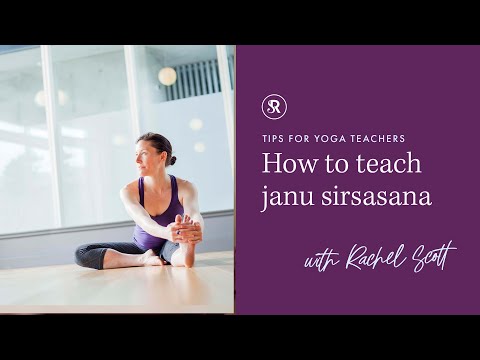 How To Teach Janu Sirsasana: Tips for Yoga Teachers & StudentsRachel Scott · 11:34