Chapters (5)
The DARK SIDE of Ashwagandha
In this practice
Key teachings
- Mindful and responsible use of natural remedies
- Understanding adaptogens for stress management
- Importance of individual body awareness and contraindications
Ideal for
- Individuals seeking holistic stress relief
- Yoga practitioners interested in Ayurvedic support
- Anyone exploring natural ways to improve mental and physical well-being
Lesson
Instructions
Get access to my FREE resources 👉
Ashwagandha has many health benefits, but does it also come with side effects? Find out about the dark side of ashwagandha.
0:00 Introduction: What is ashwagandha? 0:14 Ashwagandha benefits 0:53 Should I take ashwagandha? 1:39 Side effects of ashwagandha 3:06 Taking ashwagandha
In this video, we’re going to talk about the side effects and benefits of ashwagandha. Ashwagandha is a powerful herb that helps to reduce stress and anxiety. Along with stress management, ashwagandha has numerous potential health benefits, including the following: •Reduces nervousness •Helps reduce cortisol •Increases VO2 max •Increases testosterone •Improves sleep •Improves recovery •Lowers blood sugar •Helps improve insulin resistance
However, there are some things to consider before taking ashwagandha. Avoid ashwagandha if you have a hyperthyroid condition like Graves' disease because ashwagandha speeds up the thyroid.
Because it lowers blood pressure, it’s best to avoid ashwagandha if your blood pressure is already on the low side. If you have low cortisol, you won’t want to push it even lower with ashwagandha. Pregnant or breastfeeding women should also avoid ashwagandha.
Don't take ashwagandha if you’re sensitive to nightshades or have a genetic problem that causes you to have too much iron. If you take too much ashwagandha for too long, some people describe feeling no emotion or feeling numb.
Most people who experience adverse ashwagandha side effects have taken it for too long and in high doses. Consider keeping your ashwagandha intake at around 600 mg daily, broken into two 300 mg doses. It’s also best to limit your intake to two months at a time.
Dr. Berg, age 59, is a chiropractor who specializes in Healthy Ketosis & Intermittent Fasting. He is the author of the best-selling book The Healthy Keto Plan, and is the Director of Dr. Berg Nutritionals. He no longer practices, but focuses on health education through social media.
Dr. Eric Berg received his Doctor of Chiropractic degree from Palmer College of Chiropractic in 1988. His use of “doctor” or “Dr.” in relation to himself solely refers to that degree. Dr. Berg is a licensed chiropractor in Virginia, California, and Louisiana, but he no longer practices chiropractic in any state and does not see patients so he can focus on educating people as a full-time activity, yet he maintains an active license. This video is for general informational purposes only. It should not be used to self-diagnose and it is not a substitute for a medical exam, cure, treatment, diagnosis, prescription, or recommendation. It does not create a doctor-patient relationship between Dr. Berg and you. You should not make any change in your health regimen or diet before first consulting a physician and obtaining a medical exam, diagnosis, and recommendation. Always seek the advice of a physician or other qualified health provider with any questions you may have regarding a medical condition.
Thanks for watching! I hope this increases your awareness about ashwagandha's benefits and side effects. I’ll see you in the next video.
Steps
- Cycling supplement intake for optimal effect
- Identifying personal contraindications for herbal supplements
- Managing dosage of adaptogens for well-being
Benefits
- Reduces stress and anxiety
- Improves sleep quality
- Enhances physical recovery and performance
- Regulates blood sugar and improves insulin resistance
Transcript
today we're going to talk about the Dark Side of ashwag gandha first let's talk about the light side of ashwag gandha it's a powerful herb I take it periodically which I'm going to talk about I don't take it all the time but ashwa Ganda has been around for a very long time and it has everything to do with stress it helps to reduce stress it helps to reduce anxiety especially if you have nervousness it can actually lower cortisol it can increase V2 Max this is why a lot of athletes take it it can increase testosterone and because it lowers cortisol it can help you sleep especially if you're getting up right around 2:00 or 2:30 in the middle of the night and it's good for Recovery it's good to help lower your blood sugar and help with insulin resistance so it's going to help you lose weight you don't want to take ashanda if you have a hyper thyroid condition like Graves disease for example why because ashwag gandha speeds up the thyroid and so if you already have a hyperfast thyroid we don't want to speed it up more also because it lowers blood pressure if you have low blood pressure you probably don't want to take it because it's going to push your blood pressure lower and also if you have low cortisol you probably don't want to push cortisol even lower than it is right now and of course if you're pregnant or breastfeeding I wouldn't recommend taking it if you're sensitive to the night shades I wouldn't recommend taking it if you have a genetic problem where you have too much iron then I probably wouldn't take it too let's kind of roll into kind of the big thing that people are talking about online when you take too much of it for too long you can end up in a situation with the feeling that your motions are flat okay you just kind of feel kind of a little bit numb might say it's too much serotonin but we don't really know but I have a theory on it the phytochemicals in ashwagandha are basically defense molecules and so the plant has generated and created those molecules to help defend against other insects things like that so it's really a pesticide so you're probably wondering like then why are we consuming it because a small dose of this molecule apparently creates some really positive effects on our body like exercises of stress why would you want to damage or create microinflammation in your muscles right when you exercise well because the body then adapts and becomes stronger probably the same thing's happening with Asanda it creates a little bit of stress it causes our body to adapt and become stronger thus the term adaptogen most of the people that you hear this from are people who have taken it for a bit too long and higher doses when you start getting into doses like 1,000 milligrams a day 2,000 3500 milligrams a day that's when you might start having some issues and this is why I recommend keeping it at around 600 milligrams per day and breaking it up into 300 milligram uh doses take that for a bit and then now let's talk about the duration I wouldn't recommend taking it for more than two months at a time and then start back up so that way the body doesn't get used to it and you don't create this chronic stimulation of certain receptors that could be a problem and then you can back off of it for a while and then cycle back on it but the overall benefits from mhag gandha are so huge I don't want to throw the baby out with the bath water now since we're talking about stress if you have not seen this video on the acur pressure points that I teach people to release stress accumulated stress you should check it out I put that video up right here
Practice summary
- Level
- all levels
- Duration
- 3 minutes
- Equipment
- Target areas
- Energy
- balancing
More practice
 Chandra Namaskar (Moon Salutation) depicts the Moon (Ida Nadi) or the feminine side of the energyHarika yoga · 0:34
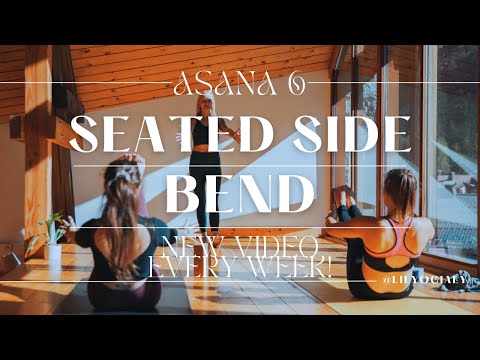 How to Parsva Upavista Konasana | Seated Side Bend Asana/Pose | Benefits (Restorative approach)aly
 Kundalini Yoga: Dark and Divine Secret of Kundalini | Truth About Kundalini AwakeningThe Yoga Institute
 "Unlock Flexibility with Ustrasana: The Ultimate Camel Pose Guide!"@ShubhMoves #yoga#yogapractice✨Shubh Moves · 0:17
 "What is Sankhya Yoga? The Mystery of Soul and Body | Lessons from the Bhagavad Gita | Podcast #2"Life changing vichar100 · 4:47
 "Yoga Board" Yama 3: Asteya: NonStealing- LauraGyogaLaura Goellner - Yoga Therapy · 17:39
 #16: Ustrasana or Camel Pose | Light on Yoga Asana (Yoga Pose) Explained by a Yoga Teacher EXPLAINEDValerie Brett
 #35: Gomukhasana / Cow Face Pose 🐮 BKS Iyengar Light on Yoga Asana Explained by a Yoga Teacher 🐮Valerie Brett