Chapters (9)
What Is Samsara? | Cycle of Rebirth, Karma, Dukkha, Wheel of Life & Escape to Nirvana
In this practice
Key teachings
- Samsara: The continuous cycle of birth, life, death, and rebirth
- Karma: The law of cause and effect shaping experiences
- Dukkha: The pervasive dissatisfaction and suffering inherent in life
- Moksha/Nirvana: Liberation from the cycle of Samsara through awareness
Ideal for
- Individuals seeking a deeper understanding of spiritual philosophy
- Practitioners interested in concepts of rebirth, karma, and liberation
- Anyone looking to break negative psychological cycles
- Students of Hinduism, Buddhism, and Jainism
Lesson
Instructions
What is Samsara? Why do we keep repeating the same cycles of birth, death, and rebirth? In this video, we explore the ancient ...
Steps
- Observation of thoughts, reactions, and desires
- Mindfulness (Vipassana)
- Ethical living
- Jnana Yoga (path of knowledge)
- Bhakti Yoga (devotion)
- Karma Yoga (selfless action)
Benefits
- Achieving inner freedom and pure awareness
- Breaking free from repetitive emotional and mental patterns
- Cultivating clarity and understanding of existence
- Finding liberation from suffering and dissatisfaction
Transcript
Did you know that over 75% of the world's population believes in some form of life after death? But in Hinduism, Buddhism and Janism, it's not just life after death. It's life, death, and life again in an endless cycle called samsara. Imagine this. You wake up, live, die, and come back over and over again until you break free. This loop isn't just philosophical. It's deeply personal. Every fear you carry, every craving you chase, every unresolved emotion, they all chain you to this cycle. Samsara isn't just happening in some distant metaphysical realm. It's happening right now in your daily life. Samsara in Sanskrit literally means to flow or to wander through. It refers to the continuous cycle of birth, life, death, and rebirth that we are trapped in. Unlike a one-time journey, samsara is a spinning wheel constantly turning through different forms, experiences, and lifetimes. Hinduism says it's fueled by karma, our actions, both conscious and unconscious. Buddhism calls it the source of duka or suffering. In genism, it's the very prison the soul longs to escape. But no matter which tradition you explore, the message is clear. This cycle is not freedom. It's bondage. If samsara is the vehicle, karma is the engine. Every thought, every word, every action. We are constantly creating karma. And that karma becomes the blueprint for our next experience or even our next life. But karma isn't punishment. It's simply cause and effect, law and consequence. Imagine your life as a field and every action you take plants a seed. Some sprout instantly, some take lifetimes. That's why someone may be born into wealth and another into suffering. The script of our lives is partially written by the energy we've put into the universe consciously or not. In Buddhist art, samsara is visualized as the bhav chakra, the wheel of life. It's a striking image. Six realms of existence, three root poisons in the center, greed, hatred, and ignorance. And yum, the god of death holding the entire wheel. Each spoke of the wheel represents a different realm of rebirth. Human, animal, godly, demigod, ghost, and hell. And we spin through these realms based on our karma. The wheel turns again and again until we see it for what it is, impermanent, unsatisfying, and not self. Only then does the wheel begin to slow. Often translated as suffering, duka is more than physical pain. It's the deep dissatisfaction that permeates life. It's the anxiety behind pleasure, the fear of losing what we love, and the restlessness of never feeling complete. Samsara promises us fulfillment. Next job, next partner, next achievement, but always moves the goalpost. That's duka. It's subtle but constant. And it's the reason even joyful moments often carry a shadow. The problem isn't just that we suffer. It's that we suffer without understanding why. Sam samsara keeps us chasing without knowing we're chasing. Here's the scary part. You don't need to die to be reborn. Samsara plays out in every moment. Every time we react unconsciously, repeat the same emotional patterns or live on autopilot. We are reborn into the same mental world. Think about how many times you've said, "I'll never do that again." only to fall into the same trap. That's samsara on the psychological level. It's a loop of identity, reaction, and desire that masquerades as freedom. In reality, it's a spiritual treadmill. And no matter how fast you run, you're still in the same place. Yes, the beauty of these ancient traditions is that they don't just diagnose the disease, they offer a cure. In Hinduism, liberation is called moka. In Buddhism, it's nirvana. In Janism, cable janana absolute knowledge. These aren't heavens or rewards. They are states of inner freedom where the cycle ends. The wheel stops. The self dissolves and what's left is pure awareness untouched by karma beyond time and rebirth. You don't reach nirvana by running harder in the wheel. You step off the wheel by waking up, by seeing reality without the lens of ignorance and desire. Every tradition offers tools. Hinduism offers Janana yoga, path of knowledge, bacti yoga, devotion and karma yoga, selfless action. Buddhism teaches vipasna, mindfulness and ethical living. The path is always inward. It begins with observation of thoughts, reactions, desires. Over time that observation creates space and in that space you begin to act differently not out of craving not out of fear but out of clarity. That's when karma loses its grip. That's when samsara begins to dissolve and you realize liberation was never somewhere else. It was always here waiting. You don't need to sit in a cave to break samsara. You can begin right now. Every time you choose mindfulness over reaction, compassion over anger, awareness over desire, you're breaking a karmic loop. The cycle ends in tiny moments of clarity, a breath, a pause, a decision, and over time, those moments become a path. The world may still spin, but you no longer spin with it. That's the beginning of freedom. Not from the world, but from the prison we unknowingly built within ourselves. You've lived this life again and again. Different names, different bodies, same patterns. But the fact that you're watching this now means something is shifting. The question is, will you keep spinning or will you awaken? If this message touched you, share it. If you are ready to understand the deeper truths of your soul's journey, . And if you've ever felt that quiet whisper inside, the one that says there's more to life than this, then follow it. That's not a thought. That's your soul calling you home. The wheel of samsara keeps turning, but you don't have to.
Practice summary
- Level
- all levels
- Duration
- 9 minutes
- Equipment
- Target areas
- Energy
- calming
More practice
 Jnana Yoga Explained: The Path of Knowledge to Ultimate Freedom | Sadhguru's WisdomYogic Chronicles · 5:30
 Top 10 Ashrams in Rishikesh for Yoga & Meditation Retreats — 2025 Guide to Parmarth, Isha & More!Yogic Chronicles · 7:17
 Top 10 Yoga Schools in Rishikesh | 200-Hour TTC, Certified & Budget-FriendlyYogic Chronicles · 7:32
 What it means to live the Yogic life. | Devvrat Yoga SanghaDevvrat Yoga Sangha · 0:58
 "What is Sankhya Yoga? The Mystery of Soul and Body | Lessons from the Bhagavad Gita | Podcast #2"Life changing vichar100 · 4:47
 Definition of Satya: What is truth and how can it be understood from a yogic angle?Yoga Gita, Yoga as it is
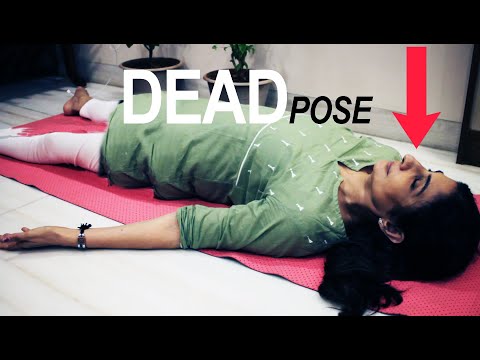 Do Shavasana with me . Simple Yoga technique for relaxation & Meditation.What is Yogic Sleep.Stressfree Yoga
 Live the Yogic Life in the Modern World #yogiclifeSatvic Yoga · 0:27