Yamas + Niyamas Explained · Yoga Philosophy for Daily Life
Practice summary
- Video length
- 11:50
In this video, I explore the Yamas + Niyamas, the first two limbs of yoga philosophy, and how they can shape your life on + off the mat. These ethical principles offer a roadmap for personal growth, self-awareness, + creating a more harmonious way of living.
Ahimsa (non-violence) Satya (truthfulness) Asteya (non-stealing) Brahmacharya (moderation) Aparigraha (non-attachment)
The Niyamas (self-discipline + spiritual growth): Saucha (cleanliness) Santosha (contentment) Tapas (discipline) Svadhyaya (self-study) Ishvara Pranidhana (surrender)
- Join my Yoga Lifestyle Course for a practical deep dive into yoga philosophy: - Become part of the on-demand Inspired Club for yoga-inspired living:
Yoga lifestyle videos for inspired living - on the mat, on screen, + beyond.
+ Email: info@carolineinspired.co.uk
Transcript
hey welcome to this mini yoga philosophy video we are diving into my favorite part of the yoga practice and that is the first of the two limbs of yoga the yamas and nihammers the yamas and the niyamas very much are the driving force behind the living or yoga Inspired Life and the yamas and the nyamas we can think of them as guidelines and almost this support that is constantly there this ancient wisdom and within the yamas and the niyamas are different practices that we can come back to as we try and navigate the highs and the lows of life now although the yamas and the niyamas are different for me personally I can just see such a connection between both of them in the way that they can then show up in life we can practice the yamas and the niyamas when we step onto our mat to do our Asana practice and then we can also practice the Amazon the neomes in everyday life we can practice pajamas and the niyamas when we are interacting with other people and when we are in the the world itself the first of the yamas ISA and ahimsa translates to mean non-harm and non-violence and we might think of that then in a physical sense but we can really start to then see the practice of non-violence with not in a not just in a physical sense through our actions but with our behaviors with our thoughts with our words with the way that we interact with the world around us with other people within relationships as well and really everything being rooted in this place from ahimsa and if we think of the opposite of then violence and harm we think of love and compassion and peace and empathy and support and so practicing a himself is really about tapping into those kind of feels and into those qualities the second of the yamas is Satya and that is all about truthfulness it's about then not just speaking Our Truth and being honest and not saying lies but it's also about living a truthful life being honest with ourselves living a life that is in full authenticity and in full alignment with our true Soul selves and this isn't just living a life because of what we think we should be doing or because Society has put us into boxes but really connecting with yourself deeply and thinking what lights me up what doesn't and when we listen to ourselves we're connecting with our intuition and that is such a strong guide to helping us live a life deeply rooted in the practice of Satya the third Yama is the practice of assaya and that is non-steeling and again a bit like the non-violence we might think of it straight away as you know not stealing from from people of things physically and yes whilst it doesn't mean that it's also then so much more as you'll probably be starting to kind of pick up on that theme with the Hammers and yoga philosophy that it's then about non-stealing of time it can be an on a ceiling of energy non-sealing of time and energy of life itself and when we practice a stay away then so much more respectful we're more mindful we live from this place of respect and appreciation for life and when we aren't stealing of something of other people's time and energy of our own of that of life then it really kind of helps us to reflect on the things that do need to maybe like we need to let go of and things that we once then welcome in if we know that life is precious and short and brief then let's not waste our time by stealing our precious energy and our time the fourth of the almonds is Obama Chariot and ramacharia is about the direction of energy now if you Google ramancharia there might be quite a few things that come up around celibacy and whilst that that is then not wrong if you think really it comes back to then this practice of choosing how you direct your energy so if somebody chooses to direct their energy through the practice of celibacy then that is up to them that is their own lives that they're living that we can really then also think of it is that how do we want to direct our energy what kind of behaviors do I want to direct it into we can think of this direction as being how we show up in our daily lives like how it how are our days filled what are our habits what are our routines what are our rituals our passions our hobbies and really being conscious and mindful of how we're directing it and direct it to high vibrational things that really lift us up rather than taking and focusing um our energy and directing it on a path that is low vibrational and that doesn't serve us the fifth of the yamas is the practice of a paragraph which is about non-attachment and about letting things go we can really think of the the practice of attachment as things that we're very attached to in modern day Society with this attachment of physical desires and but we can also then take it deeper and really think of then attachments that we have to force of being caught up in things that have happened in the past and our past isn't at home to live in but it's a place to learn from and by then letting go of the attachment of this gripping then we can then start to then move away from it not forgetting the lessons not forgetting the teachings but moving away from the grips of anything that's pulling us down so really stepping into non-attachment into you know again we can apply this practice to everything in life just like the other yamas as well moving on to the niana's the first is the practice of soja and we can think of that in a sense of cleanliness and purity and really kind of thinking of it in the sense of being mindful of what we consume not just thinking of things that we consume physically with the food and the drink that we that we take in but also being mindful of what we are consuming mentally energetically the environments that we're in our space and just really starting to see that that has a huge impact on our mental well-being it's like this mirror reflective state so the practice of Sota is about this cleanliness this Purity I've been really mindful of what you are then exposing yourself to the second of the niyamas is the practice of Saint Fisher and Sentosa is about contentment which I'm sure that you might agree with that in a modern day world of instant gratification and expecting results now then this is something that we might then struggle with and then the practice of santosha can really help us with this struggle and instead be impatient being more trusting welcoming things in and not expecting things to change straight away but putting our energy into something so the practice of being content can really help us move away from this constant desire for wanting more things and there's nothing wrong with wanting more things but maybe just trying to think of it on the the level of this constant need for things that don't actually really serve us so maybe we have this this need for materialistic things that yes might bring us a little bit of happiness maybe when we order some new clothes but it's not this deep fulfillment either so just being really mindful of this instant gratification that we expose ourselves into into modern day life and instead can we type in to be more grateful for what we have and trusting for what is to come the third is tapas and tampas translates to mean this practice of discipline of perseverance of dedication of showing up this willingness to go out of our comfort zone as well and it links quite nicely on from the previous niyama of this need for instant gratification instead can we then trust that we have to work for things that you know we can't expect to do something once and then we ask where is it or why hasn't that thing then come to life but this is a really active part of manifestation as well like if we have a dream a vision we have to put the work in to make it become a reality as well and we can think of this using Tapas to create new habits it takes 10 000 repetitions to create a new habit and Tapas is something that can help us get there that when motivation is gone can we then really tap into this inner and personal fire to help us keep on going even when we're riding through those low waves even when we have no motivation and even at times when we're maybe doubting ourselves this is when we need to come back to the first Yammer of ahimsa and believe in ourselves show ourselves compassion and forgiveness and to just know that we are so deserving of whatever it is that we're wanting to welcome in and desire but using the practice of Tapas to help us get there it's by the Ayah the practice of cell study you watching this video right now is a practice of that you are studying and learning more about this practice of yoga by showing up and it again follows on nicely from tap at us like we have to then take this time to reflect on what went well what didn't go well what do we need to change what do we need to let go of what do we need to address what do we want to welcome in and self-reflection is really really powerful really highlighting areas that we need to maybe make take responsibility for but also reflecting that that responsibility is something that's liberating and we can then choose to direct our energy on the path that we want to take in life and the final of the niyamas is ishwara planet NaNa which is about surrender interesting surrendering to the universe a higher power to whatever it is that you believe in but just putting more trust into things and I think that's something that we can definitely tap into a lot more again like we live in this fast-paced modern world and where at times do we just slow down when do we just let ourselves completely be when are we then more trusting and tapping it into this more Blissful State this slowness we can practice ishvara paridana when it comes to things like wanting to make changes and wanting to welcome something in so when we've done the work on Tapas and spadia and doing the doing and the reflecting when we've done everything we can it's then time to to sit back and let the universe learn work its magic and be trusting in the in this process it's almost thinking of like having some popcorn sitting back and just enjoying the ride and I would argue as well to say that it's something that's quite hard to do especially when we are in a very doing energy in the modern day world being and tapping into the yin is something that we do find quite challenging and so yeah the practice of Aishwarya panadana of surrender and letting things be so that was a very little dip of your toe into the ocean of the yamas and the niyamas but they are things that I really encourage you to dive deep into to read and there's books out there there's blog posts I've got so many different videos as well so yeah explore dive in and just see how living a yoga Inspired Life can really transform your life thank you so much for watching
More practice
 Asteya Yoga Philosophy · Practising Non-Stealing + Living with GratitudeCaroline Inspired · 4:57
 Saucha Yoga Philosophy · Cultivating Cleanliness + Purity On + Off the MatCaroline Inspired
 My Yoga Studio Journey · How I Opened My Own Yoga StudioCaroline Inspired · 13:55
 My Yoga Teacher Training Journey · How I Became a Yoga TeacherCaroline Inspired · 18:24
 Jivamukti Yoga on the Yamas and Niyamas and VeganismYogaTherapy Institute
 Moral Guidelines for Yogis - The Yamas & Niyamas · Ep 2 Yoga Off the MatEmily Rowell Yoga · 15:15
 The Eight Limbs of Yoga explained · Michaël Bijker - YogalapMichael Bijker - Life Awareness Project · 16:39
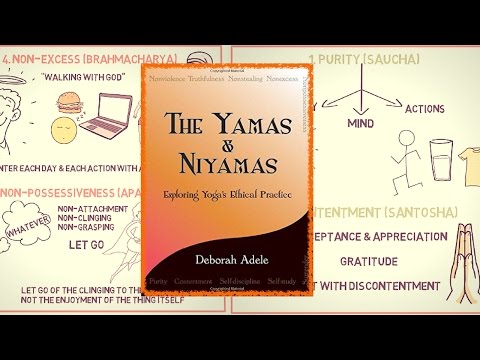 The Yamas and Niyamas - Exploring Yoga's Ethical PracticeWise Living Tools · 5:12