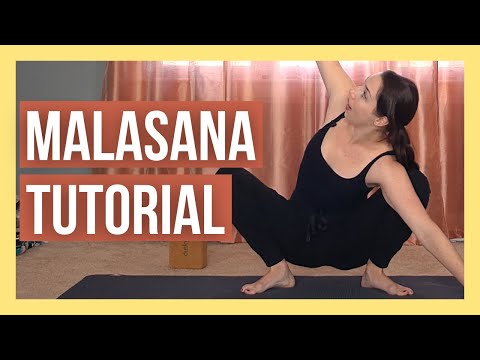
How to do a Yogi Squat - Yoga Tutorial
Practice summary
- Video length
- 6:43
Can't get your heels down? Wondering what you're actually meant to be doing in your Malasana? This 'how to do a yogi squat' tutorial should help :)
🚨 Claim a FREE 7-Day Yoga Rebel Programme via the link below and see for yourself how this method has helped thousands of women get strong AND flexible:
Please consult with a medical professional to ensure you are ready for physical activity before beginning these classes. Participation is subject to and governed by English law and the exclusive jurisdiction of the Courts of England and Wales.
Transcript
hello friends and welcome to my channel my name is liv and today's short and sweet tutorial is on yogi squat or malasana or garland pose whatever you want to call it this pose is very very different in individual bodies because it's very much a hip opener and everyone's hips are very unique chances are if you're watching this video it's because you struggle with this pose and therefore be offering suggestions of how to work on it and how to practice it if your body just quite simply can't get into it in the way that some people seem to be able to just sit down as though it's nothing so what's the purpose of the pose anatomically speaking malasana or our yogi squat is lengthening our inner thighs also known as our groins or our abductors our abductor muscles it's opening into the hip so because the thigh is going to the outside the body there's this external rotation in the hip and it's lengthening through our glutes as well so if the leg i know i'm not in a yoga swap but it's in this sort of position so obviously it's lengthening this part of the body here it's also improving our ankle mobility our ability for the heel to stay down and for the knee to be able to travel over the towards the toes so that's another thing that can sometimes hold us back in this pose is our ankles don't have quite the uh range to be able to let the body lean forwards to find the balance which is when we find that we fall back onto our bums so let's just take a quick look at what we're hoping the pose will look like our feet want to be wider than hip distance apart so if we're entering it from standing take those feet usually about as wide as a yoga mat that might feel too wide remember the distance between your feet in this pose is very individual to you allow yourself to readjust to where feels best the toes point ever so slightly outwards because we are externally rotating these legs so as we sit down towards the squat we're thinking of our sit bones aiming towards our heels our knees drive out in the direction of our toes so often diagonals and we want to keep our chest as upright as we can on top of our hips easier said than done when the mobility and the flexibility is not quite there but that's where we're working towards our hands can then come together and as we lower the hands towards the belly the elbows come to the inner thighs and help drive those legs a little wider so when we're here we're trying to let the weight go towards the outer edge of the feet so towards the little toe edges what happens quite a lot because of the limited range into the hips is the feet start collapsing inwards and the thighs fall inwards and we start lowering into the the medial arch of the foot just try to counteract that push the weight towards the little toe edges let these arms help and then trying to keep that chest nice and tall so what happens if we can't quite get here depending on how it's being sequenced in the class quite often you'll hear oh you know stay on the balls of your feet so when your feet come a little bit more narrow you can lift the heels and stay into this sort of froggy squat depending on the body that you're living in this might give you a slight inner thigh stretch chances are not too much and it's probably also going to help work on your ankle mobility if you think of sinking the heels despite the fact they're not touching down it's probably going to help your ankles work towards that range but it kind of avoids the hip opener it's it's taken that bit away we're no longer drawing our leg alongside our body and we're sort of sitting into this squat which tends to make our uh shin muscles ache so something that might be a little bit of a better alternative if your heels struggle to get down in your melasna but you want to work your way towards being able to do that a better alternative would be to work with some props blocks so one way a lovely way to use a block to help us in our melasna so if we come to it as we did a moment ago feet are slightly wide then hips toes are pointing wide as we sink our hips down towards the heels we get the point it starts to feel tricky take the block just below your sit bones so you can sit onto it now obviously without that block there i'm gonna fall backwards that weight is falling backwards this is going to really help you find the shape in the hips it's going to give you the inner thigh stretch it's helping those ankles stay mobilized and then you can take the same hands of the hands coming together and the elbows driving wide this is probably my favorite variation to offer and as you try and progress away from the block you can just see if you can lift your bum slightly off of it and obviously you can come back down and that sort of effort of lifting up holding that pose coming back down over time you'll find that you can lift up and you can stay there without the need for that block another alternative would be to take a rolled up blanket this is the same idea as doubling over the mat but doubling over the mat can just be quite impractical during a class if you're thinking right i'm going to pick the mat up and double it over to make something thicker so it can go under my heels suddenly you're then moving on from your molasses and you've got to take your mat and go put it back out so if you have a blanket if you're practicing at home which all of us are at the moment you can use a blanket instead so as you come to try and come towards that yogi squat so my heels are lifted i'm going to sink my bum down take that blanket underneath the heels obviously if you've got a long blanket you'll get both otherwise you can do a couple that allows that heel to stay that little bit lifted adjust it as much as you need perhaps you can triple quadruple your blanket to give you that little bit of extra support under the heels like wearing a little bit of a wedge that enables you to send those knees that little bit further forwards it enables you to sit that little bit more upright so again you've still got the weight sinking towards the heels you're still able to open the hips into the shape of the pose and find that nice alignment it's then much simpler to simply throw your block away and throw your blanket away as you move through the rest of the sequence final alternative if you have no props or assistance to hand and you don't want to take yourself onto the balls of your feet you can simply hold yourself up with your hands so as you come into that yogi squat where you're struggling to get that get those heels down obviously without support with the lack of mobility you'll end up just falling onto your bum so you can leave one hand in front of you one hand behind keep that hand as a bit of a kickstand to keep you tall and now drive your thighs away from you the hand behind is there giving us balance it's a lot more of an active pose for you here if you take this variation because your muscles of your legs have got to prevent this inwards collapse of the feet you've got to drive those thighs wider you could potentially even take both hands behind you just here so you stay nice and open towards the front of the mat thanks for watching guys i hope you found that helpful and it gave you some ideas on how you can practice your yogi squats if perhaps it's not coming to you very naturally you can find some more of these short and sweet tutorials in this playlist just here please feel free to leave any suggestions in the comments of other poses that you'd like me to break down in this way and i'd very much appreciate if you could click the thumbs up button to help support my channel
More practice
 I Wish I'd Known This Before Yoga Teacher Training!Livinleggings · 9:17
 How To Crow Pose for Beginners - Learn to Fly in 5 MinutesLivinleggings · 5:27
 Malasana Yogi Squat Pose Tutorial - Tips & Tricks for BeginnersYoga with Kassandra · 12:08
 15 Minute Grounding Yoga Practice · Root Chakra ActivationBlack Yogi Nico Marie · 14:35