The 5 Vayus: Udana Vayu- LauraGyoga
Work with Laura Online: I am now offering yoga instruction, yoga therapy and teacher mentoring on two different virtual platforms: ...
Transcript
[Music] welcome to the fourth board in our series about the five values so today we're going to be talking about Oh Donna vo and this is the Bayou that is predominantly found in the neck and the throat and it's an upward movement so with the bayous we're talking about directions of movement we're talking about functions of energy these are the five divisions of prana these are the five different functions that prana carries out in our body so for Adana value in the throat in the neck that upward movement you can think about as you exhale and you're using the exhale to pass through the vocal cords and create speech like I'm able to talk to you right now I'm using Oh Donna vo I'm using that wind that energy that creates the output of speech of self-expression so a lot of what we create when we're speaking is connection it's being able to talk to somebody is being able to exchange information it's being able to put information out there and then through that process of connection of exchanging information there is growth and if you think about the direction of Donna as being up through the throat up toward the head up toward the area of the brain it's really a lot about gathering that information and then bringing it up to where it can be processed and it is a lot about moving past I'll say some of like the more basic things so if we think about the root chakra the physical aspect of our world your house the food that you need the water that you need the things that we have to take in this is going past that this is going to some of the less tangible things of self awareness and spiritual growth the things that happen up higher in the chakra system so there's an upward lift that's associated with you Donna vo and you'll notice that in practices where you're working on new Donna by you inversion is a really big part of that so even though it seems kind of opposite because it's an upward lift through the throat but that upward lift is what allows us to do inversions and the one particular pose that I like to think of is in crow pose which isn't a complete inversion but we're going up onto the arms and there needs to be that feeling of upward lift and lightness for you to have the feet come up off the mat and be able to get your balance on your arms I love that pose because you do get that feeling of upward lifting and lightness so in the yoga practice we don't do a whole lot of speaking but depending on where you practice there might be some chanting studios might have you chant ohm at the beginning or the end of the practice and if you're doing like a Kundalini practice there's probably a fairly strong amount of chanting worked in amusing mantra and then there might even be some singing and I love that because we all know that if you are in your car or you're in the shower and you're singing it really makes you feel better it has this uplifting quality it helps us to regulate our emotional state so why not use that in our yoga practice as a way to make ourselves feel better at the end of Kundalini practice when you do the longtime Sun and everybody joins in and sings that song that is such an uplifting process of everybody's voice coming together and even if you're just doing ohm that quality of everybody's voice of all those sounds joining together is a really powerful moment in your practice that feeling of connection so the last mile there is the use of mantra and sometimes we'll use mantras out loud in our practice or we'll use internal mantras but mantra has a really strong effect of up ding our thought process where and I personally use this if you start to notice yourself worrying about something or maybe getting into a negative thought pattern you can break that process by taking a mantra and putting that into your thought process on purpose letting it clear out the other stuff and then the underlying meaning of the mantra so whether you're using a mantra made of English words or words that you know what they mean or you're using a mantra that might be in the sanskrit where you don't necessarily know exactly what it means that a lot of times they say that we're not supposed to really translate it to an exact meaning it's more about the sound and the vibration and the energetic effect that the mantra has rather than the actual translation of what it means but that process of inserting the mantra into your thought process clearing out patterns of worry or clearing out negative thinking is then going to elevate the thought process to a different level and that's the whole concept with Buddha Nevaeh its that upward lifting movement that lightness that process of growth that happens here and then we're using the different aspects of speech of chanting of singing of repeating a mantra to help that process that growth and that upward lift so in terms of the practice I already mentioned inversions are a really strong component if you want to increase or strengthen Adana value Jalandhar bandha the chin lock is also a good component of this practice and really any breath work that's going to help to bring awareness to the throat but specifically the humming B breath when we exhale and we hum because there's a strong vibration through the throat I love that breath because for me it's very focusing and very calming because it slows down my exhale so much that it really has that effect of calming the nervous system down and just focusing on that feeling of vibration the sound of the humming and the length of the breath is very focusing so then you Jai breath the ocean sounding breath that we typically use throughout practice that is your anchoring element that is the piece of the practice where you have that sound as the breath comes and goes and it gives you something you can anchor your mind to so that you don't start to wander and think about other things the lion's breath that breath is really great for working on new donor value because in the lion's breath we have that very strong very powerful exhale and you get the hands going and you stick the tongue out and roll the eyes up as you very strong ha breath very strong exhale but it's lots of strong upward movement with that breath so it's a great one for working on identify you the inversions if you think about the traditional closing sequence that we do in practice you'll do an inversion it might be shoulder stand and then you take that into plow and then you come down and you go into fish pose all of those you'll notice are very focused on the movement of the neck you do have to be extra careful if you have any neck injuries and I always recommend that when you're practicing shoulder stand or plow you should do that with a blanket underneath your shoulders and your upper back so that there isn't too much flexion in your neck and then same thing when you go back into fish pose just being really aware of if you have any previous neck conditions you have to be really careful with that whole sequence but when you're doing that sequence you're doing an inversion you're putting your neck in to end range flexion chin down toward the chest during shoulder stand and plow and then during fish pose you're getting that end range neck extension so you're getting the full range of movement of containing and holding and then opening and allowing freedom of movement so it's a great way to regulate the energy around the neck and the throat back a little while ago when we were talking about some aspects of the neck oh it's important to remember that this area of the body is rather delicate because there are so many structures that are really close to the surface and we hold so much tension in the neck and the shoulders that a lot of times there's some things going on in this space but I think about the neck as being this kind of highway or this connection between the central nervous system of the brain and the rest of the body where everything has to pass through this little area that holds our head on to the rest of our body everything has to go through there the breath has to come and go through that area the circulation that has to go up to the brain and then come back down all of the nerves all of the information has to go down to the body so the neck from an anatomical standpoint is such an important structure in the body and then from breathwork this is where all of that movement is happening so food on of iU is just kind of adding on to that whole process that we're looking at from prana by you being in the lungs and the heart drawing the air in and then upon of iU being down in the pelvis the grounding process the exhale and then Samana value being that equalizing force in the middle of digestion and then we come into Adana by you as the part in the throat and that upward lifting movement when you have all of the processes that are balanced and regulated in the middle here and it's sustaining our life while we're digesting our food well we have energy then it's a lot like the chakra system where we build on that foundation so that then we have the energy and the strength and the effort to work on personal growth where if those other things aren't working well if we're not getting enough lifeforce and if we're not able to let go of things if we're not able to digest experiences then growth and connection and self-expression and the creativeness of that is just not going to happen because you don't have that foundation of the other energies working well so it's really pieces of a building block if we look at what happens when you have weak Odana value there's a there's a stagnation there's a lack of growth there's difficulty in communication which can cause difficulty in relationships of course and you avoid challenges because in that space of challenge in that space of discomfort that's where growth is going to happen but if you don't have the other stuff in place the other values that we talked about you're not going to feel like you are able to meet that challenge so you're going to avoid those situations where growth would happen and that's a hard place to be in because you very much will feel that feeling of just being stuck where you are and not being able to change or evolve so then excess do Donna Rio now if you know anybody who talks all the time incessant talking maybe not so much explaining things people who like to repeat themselves a lot we all know people who are excessive talkers and in that process of talking endlessly a lot of times there's not a lot of receptivity they're constantly putting things out and not so much listening and taking information in so that would be an excessive boo Donna value that needs to be calmed down along with that there is a stubbornness and maybe even a little bit of arrogance that the way that you do things is always the right way they are not so much open to learning or trying new things it comes back to that experience of growth very set in their ways so excessive odana by you is also not a good thing but when it's balanced when neutona by you is balanced we don't have too much we don't have too little you are in that space where communication is open there's maybe you're in a conversation and it's a good balance you're talking you're listening you're responding to what the other person is saying you're adding to the conversation it's not one-sided there is a learning process a growing process in that exchange back and forth and you are articulate you're able to express yourself words are coming to you well this might even apply to being able to write things that expression of putting words onto paper and having it express what you were trying to convey and being assertive so if something happens and it is not quite feeling right to you that you have that ability to step up and say something instead of just letting it pass so for many people that assertiveness can be a challenge but working on who Donna by you making sure that your self-expression is strong and the quality of self-expression the quality of communication is there and working on these different aspects of our practice that keep this area open to make sure that you feel comfortable expressing yourself and I know for me when I was newer to practicing yoga and he just started chanting or even just ohm the first time that I was in a yoga class and they started to ohm I thought it was so strange and I did not want to join in I just kind of stopped there and listened but over the years of practice getting really comfortable with the sound of ohm and what it felt like to have my voice join in with every everybody else's and then later on moving into other forms of chanting other forms of mantra and finding that to be really helpful because I know as my own experience in life and in my yoga practices that I'm not a very expressive person in terms of talking and communicating so I think that that is probably why mantra and chanting has become a part of practice that I feel really connected to because that is something that helps me to strengthen Adana value which for me may be naturally isn't as strong as it should be or it could be but the more that I use that the more comfortable I feel to express myself and explain things so hopefully that's helping me in this process of making videos and sharing this information with everybody else so um thank you so much for joining me for this fourth Yoga board our next one is going to be viana of value which is the the wind of overall integration of putting everything else that we've talked about together into this overall full-body experience of the energy so I hope you will come back for the fifth yoga board thank you so much you
More practice
 "Yoga Board" Yama 3: Asteya: NonStealing- LauraGyogaLaura Goellner - Yoga Therapy · 17:39
 The 5 Vayus: Apana Vayu practice- LauraGyogaLaura Goellner - Yoga Therapy · 18:33
 Yoga Kosha 3: Manomaya : Mind/Emotion - LauraGyogaLaura Goellner - Yoga Therapy · 42:41
 8 Limbs of Yoga Board : Yamas- The No's- LauraGyogaLaura Goellner - Yoga Therapy · 18:23
 What Makes a Great Yoga Teacher? Components of Yoga Teacher Training- LauraGyogaLaura Goellner - Yoga Therapy · 17:10
 What is Yoga Therapy? The How, Where and Why of Yoga Therapy Sessions / LauraGyoga C-IaytLaura Goellner - Yoga Therapy · 11:56
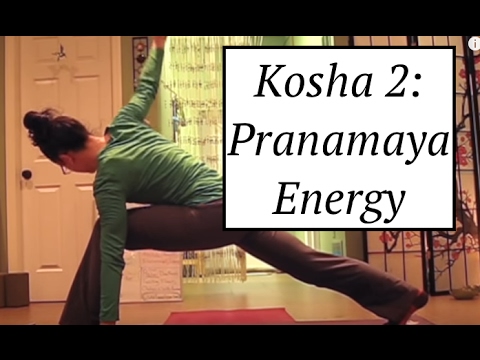 Yoga Kosha 2: Pranamaya Practice- LauraGyogaLaura Goellner - Yoga Therapy · 16:47
 Prana Vayu - The Five Vayus 1/2Paulus Yoga & Consciousness