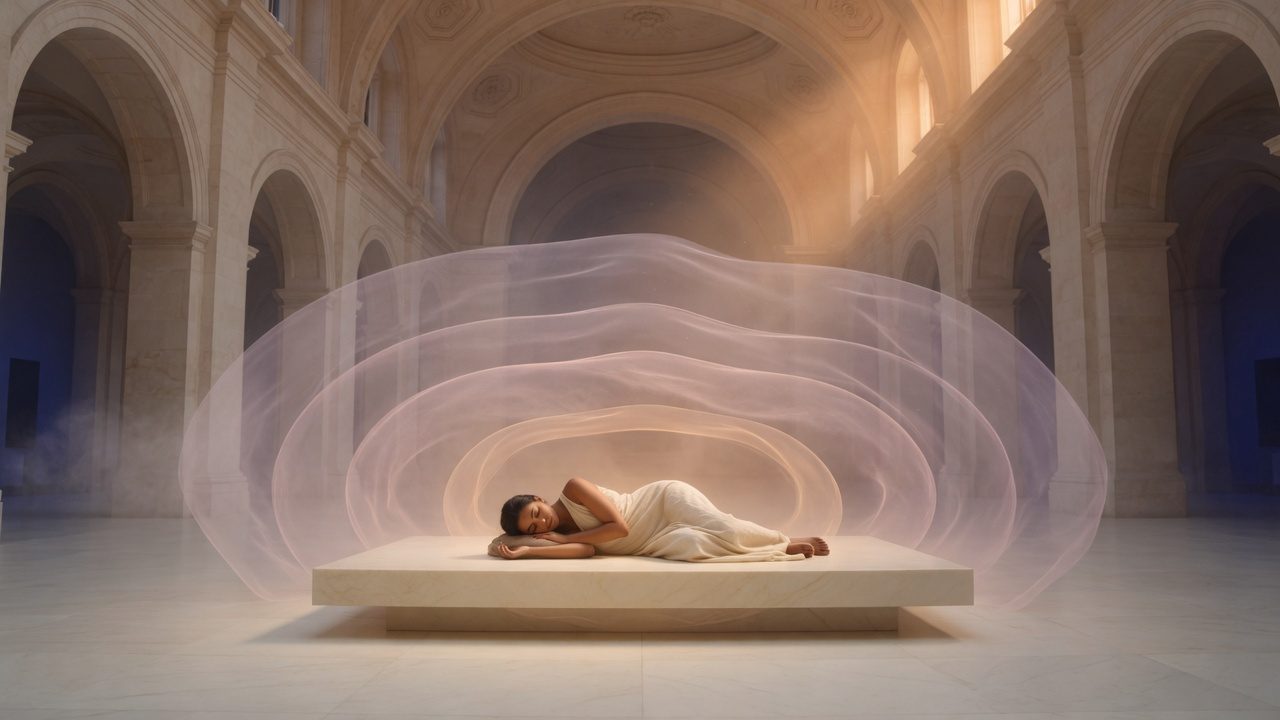
Yoga Nidra (yogic sleep) is a guided practice of conscious deep rest. You usually lie on your back. The body softens as if asleep, while awareness stays present enough to hear the guide.
It sits between meditation and sleep. Many people use it for stress, insomnia, recovery after a busy day, or as a short reset when there is no time for a full night’s rest. In modern research language you may also hear non-sleep deep rest (NSDR) for related protocols.
Not ordinary sleep
Sleep turns awareness off. Yoga Nidra keeps a quiet witness while the nervous system settles.
Not a workout
There is almost no movement. Comfort and listening matter more than form.
Sankalpa
A short positive resolve — planted at the start and end — gives the rest a direction.
Rotation of consciousness
Attention moves through the body, breath, feelings, and imagery in a systematic order.
How to practice Yoga Nidra
You can follow any guided track below. Use this map so the practice feels clear the first time.
Prepare the roomLie on your back (Savasana). Blanket for warmth. Small pillow under the head. Optional bolster under the knees. Phone on do-not-disturb. Dim lights.
Set a sankalpaOne short sentence in the present tense — for example, “I rest easily,” or “I meet the day with clarity.” Say it silently three times when asked.
Follow the guideBody scan, breath awareness, opposites, and imagery. Stay awake enough to hear. If you drift or sleep, that is okay — return next time a little more present.
Return gentlyReaffirm the sankalpa. Wiggle fingers and toes. Roll to one side. Sit up slowly before standing.
Recovery after travel, illness, or emotional strain
Building interoception — feeling the body from the inside
This is educational practice, not medical care. If you live with trauma, panic, or complex sleep disorders, choose a trauma-informed teacher and follow your clinician’s guidance.
FAQ
Should I stay awake?
Ideally yes — soft awareness while the body rests. Falling asleep still gives rest. Try an earlier hour or a shorter track if you want to stay present.
Morning or night?
Night supports sleep. Morning or afternoon Nidra can restore without replacing a full night. Avoid jumping up the second the track ends.
What if I cannot lie on my back?
Lie on your side, or sit supported with a straight spine. Comfort comes first. Tell yourself the shape that keeps you safe.
How is this different from meditation on /sit/?
Many sits keep you upright and attentive. Yoga Nidra is usually supine and systematically relaxes body, breath, and mind toward yogic sleep.
Roots: classical Yoga Nidra as taught widely through the Bihar School lineage (Swami Satyananda Saraswati) and related modern guided-rest protocols. Practice freely here. Support the mission when you can.