How to do Goddess Pose · Standing Yoga Pose · Utkata Konasana with iRyne Yogavatar
Practice summary
- Video length
- 2:16
How to do Goddess Pose (Utkata Konasana) step by step. This video explores the yoga pose with detail techniques, including foundation, body alignment, strength, stretch and breath. Guided by the founder of Yogavatar® Yoga School, iRyne Yogavatar, learn the simple way of moving into the pose and out from the yoga pose with detailed instructions.
BECOME A MEMBER Join us now to get unlimited access online classes!
BECOME A CERTIFIED YOGA TEACHER Yogavatar® is a new age yoga that brings the ancient wisdom of yoga to a modern world in tangible and practical way. We are on the mission of spreading Yoga Love to the world! Join us for 200-hr Yoga Teacher Training Course! Become a certified yoga teacher, it’s your turn to OM the world!
STAY CONNECTED WITH US
CREDITS Yoga Trainers: iRyne Yogavatar | R2 Tho Hui Lee Video Creators: R2 Tho Hui Lee | iRyne Yogavatar
Transcript
goddess pose or katakunasana is a powerful stunning yoga asana where the low body is in a white liquid squat and the arms are either rest on the knees at the chest in prayer or raised at shoulder height the name is derived from the sanskrit ukata meaning powerful or fierce kona meaning angle and asana meaning pose thus the name of the posture refers to the fierce angle of the legs and the strength and determination built through mastering this posture begin in tadasana inhale hands at the hips exhale step direct foot to the back treat it away from the front of your foot turn your hips and chest towards the side of a long mat turn your toes out slightly so they point to the corners of your mat on an exhalation bend your knees directly over your toes and lower the hips into a squat work toward bringing your ties parallel to the floor but do not force yourself into the squat external arms out to the side and rest their hands on knees bringing your thumb and your legs together in chiang mudra the sitting bones are pulling down towards the mat direction press your hips forward as you roll your thighs back keep your knees in line with your toes soften your shoulders gaze softly at the horizon the abdominal muscles are engaged to keep the spine upright sticking onto the pelvis breathe while holding the pose to release bring the hands to the hips inhale straighten the knees exhale turn the back foot to the front hip chest facing forward inhale step to the front exhale hand on the side back to tadasana
More practice
 Baddha Konasana (Bound Angle Pose) Tutorial · Encyclopedia of Yoga with Kino MacGregorOmstars · 15:42
 Beginners Yoga: How to do Supta Baddha Konasana · Reclined Goddess Pose · Reclining Bound Angle PoseNutrizon Official · 4:13
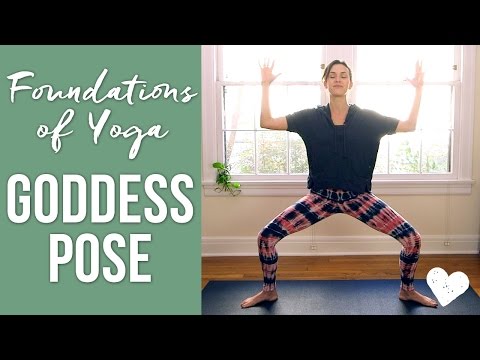 Goddess Pose - Foundations of YogaYoga With Adriene
 Goddess Pose, or Utkata Konasana, with Margaret Kirschner at Asheville Community YogaAsheville Community Yoga
 How To Do Goddess Pose (Utkata Konasana)YanvaYoga (Iana Varshavska) · 1:31