Chapters
The Truth about Yoga and Osteoporosis · Will 12 Yoga Reverse Osteoporosis?
Practice summary
- Level
- intermediate
- Video length
- 13:04
- Equipment
- Energy
- balancing
- Target areas
In this practice
Key teachings
- Critical evaluation of scientific research
- Understanding research methodology and potential biases (e.g., selection bias, subgroup analysis)
- Nuanced perspective on the role of yoga in bone health, specifically regarding osteoporosis reversal
- Importance of comprehensive bone health strategies beyond a single intervention
Ideal for
- Individuals with osteoporosis or osteopenia
- Anyone interested in evidence-based approaches to health
- Healthcare professionals and researchers
- People seeking to understand the 'truth' behind health and exercise claims
Lesson
Instructions
In recent years, yoga has gained widespread popularity as a holistic practice for improving flexibility, strength, and overall well-being. But can yoga also play a role in reversing osteoporosis? In this episode, Dr. Douglas Lucas discusses this intriguing question, examining the potential benefits of yoga for bone health.
*FIND HIGH-QUALITY SUPPLEMENTS HERE!*
🦴 *Stronger Bones. Healthier Future.* I’m Dr. Doug Lucas, and my mission is to help you protect your bones, balance your hormones, and extend your healthspan. On my channel, we focus on osteoporosis prevention, bone strength, hormones, and longevity because strong bones aren’t just about avoiding fractures. They’re the foundation for a longer, healthier life.
📚 *Join me for a FREE Live Masterclass* Want to get your questions answered, hear real-life osteoporosis reversal stories, and learn the 5 Bone Health Mistakes to Avoid? I’ll share proven strategies to build bone density, improve bone quality, and protect your healthspan, straight from my experience as a Board-Certified Orthopedic Surgeon & Osteoporosis Reversal Specialist.
🔗 *Register here for FREE: www.osteocollective.com/build-bone 💻 *The OsteoCollective* A global community dedicated to bone health & longevity. Learn, connect, and take action:
*Let's connect!*
Watch and Enjoy! Dr. Doug Lucas Key Moments in this Episode ========================= Chapters
00:00 Introduction 2:08 Study Details 8:25 Masterclass Details 10:40 Conclusion
Benefits
- Improved critical thinking skills regarding health claims
- Enhanced understanding of scientific study limitations and interpretations
- Informed decision-making about exercise choices for bone health
- Nuanced perspective on the effectiveness of yoga for osteoporosis
Transcript
welcome back to the Dr Doug show your resource for bone health hormone optimization and health span so are you looking for the right exercise modality to improve your bone health you probably are because most people that are struggling with osteoporosis osteopenia muscle loss are looking for what is that thing that I can do that is going to give me my best bang for my buck and help me to reverse osteoporosis naturally I've been sent this article from 2016 I don't know how many times people love yoga and that's great I love yoga too but there's an article from 2016 called 12 minute daily regimen reverses osteoporotic bone loss it's all about yoga and the claims are very compelling so I understand that yoga is popular I understand that people want to find the confirmation that what they're doing is going to be helpful for their goals totally get that but what I am concerned about with this particular study is that the claim is pretty bold and it's not consistent with other studies that I've been seeing nor is it really consistent with my understanding of how we can improve bone and what it takes to improve bone density and quality so I'm going to go through this publication in detail and I've run this by some experts in the space of yoga you know yoga teachers because I'm not an expert in in yoga by any means just watch me do it and you'll understand what I mean so I wanted to get an additional take on this so I'll talk to you about you know my experience with this their comments on this and you know we'll see how we can put this together so that you can understand where yoga fits in because yoga does fit into a program that is going to help to improve improve health overall but the question is is will it specifically improve your bone health and that's that's a big question to answer so we're going to move on with this but before we do if you haven't already please click that button the reason being is that the more people that click the button the more YouTube is going to promote this to other people looking for bone Health Solutions if you think that we're doing a good job presenting information about about bone health please help us help others by clicking that button all right so first things first let's talk about this publication so the author the the primary author here his name is Lawrence Fishman he's an MD he has a practice called sciatica toorgle the guy loves yoga and that's great I applaud him for that I am a champion for the things that I believe in and I am totally for him being a champion for what he loves and believes but let's talk about this study in detail because I think there's some things here that people need to understand so firstly when they designed this study or at least how they describe it they recruited people through the internet which is fine um that's one way to to recruit people but when you are recruiting people specifically through the internet and you're calling people to you rather than taking a population and and finding people that meet your criteria you're automatically creating a little bit of bias not to say that that doesn't happen but there's already bias included here but they needed people that were going to actually do the intervention so I get that their inclusion criteria included having had a dexa scan within the last six months so we like that they didn't actually have to have osteoporosis to be in the study so that could potentially be an issue although they try to control for that if they did have osteoporosis or osteopenia they were required to get some labs they were required to get an CMP which is a complete metabolic panel para thyroid hormone TSH which is to look at the thyroid ESR which is an inflammatory marker although not one I would choose to use 25 hydroxy D which is the storage form of D that most Physicians would get they also got 125 dihydroxy D which is the active form of D which I think is interesting I'd actually love to see those data ntx which is the urin form of the blood test CTX that we talk about often and then these people were excluded if they had abnormal results so important Point here which is that when we see people coming in for us they are likely going to have an abnormal CTX or ntx if they're struggling to build bone so if you eliminate people that have elevated CTX and ntx you're automatically going to get two things one you're going to get an older population because the vast majority of women who are going through menopause if they're not in hormone replacement their CTX is going to be high so you're automatically excluding people who are potentially going to lose bone anyway so that's important also you're going to get rid of people that potentially have parathyroid issues which is fine understand that thyroid dysfunction also really common so you're going to eliminate those people inflammation which we know is a cause of bone loss also going to be excluded people that have vitamin D deficiently deficiency also going to be excluded so you're kind of eliminating a lot of the people that you really need to improve that intervention so you're really selecting your population for those that are not rapidly losing bone not vitamin D deficient don't have chronic inflammation and don't have thyroid dysfunction which is good if you wanted to find people that are going to build bone well that's that's the group that you want to work with so then they sent them a DVD that showed them 12 poses they asked them to hold the pose for 30 seconds there were three different skill levels for each pose and then they repeated the dexa scan after two years Radiologists were blinded to the participants but there's no Placebo so I guess they were just blinded to the initial scan and not to the follow-up scan I'm not really sure what else they would be blinded to so then let's look at the number cuz this is really where this study kind of flies off the rails so they enrolled 741 people 247 were included in the study so that meant that these were 741 that were enrolled meaning they met the inclusion criteria who knows how many didn't meet the inclusion criteria I don't think that's in a study there were 247 of those 741 that were considered to be compliant meaning that they did the the yoga or they reported to do the yoga about every two days and that included 202 women with an average age of 68 8.2 years the rest obviously being men 83% of the group had osteoporosis or osteopenia which is great not surprising in that age group particularly when you include the inclusion criteria they had it they had aexa and they signed up so they're likely to have osteoporosis so again this is how they kind of controlled for that and then I was excited to see the results of this because I think it's an interesting group but when you look at the data as it's presented in the studies this is where things really get a difficult to understand and when I sent this other kind of experts in the field even people that were researchers had a hard time understanding what was going on in this study and so what they did or at least what it seems like what they did is in the in the statistics they split the groups into really really small subgroups so I've talked about this before whenever you do a subgroup analysis you kind of run the risk of a little bit of bias in One Direction or another I think that's okay as long as you try to control for that or you explain for that but when you split 741 people into then a couple people and then you split them into subgroups of between 14 and 29 people man you're really looking at a a very very small subsection in a very biased and very selected group so then when it came to the actual results what they showed is that there were statistically significant improvements compared to what they would consider to be pre-study losses meaning that the average loss of bone in that group not compared to statistical average but in that group prior to the study and so I see this often in osteoporosis studies because they want the intervention to show Improvement rather than doing it from Baseline they'll do it from the expected loss so better than the expected loss true but that doesn't actually mean that it's making it any better it just means that you're not losing bone because that is the the norm and so the conclusion of the study was that the 12 yoga poses studied here appear to be a safe and effective means to reverse bone loss in the spine and femur and have weaker indications of positive effects on the total hit measurement of the dexa scan there qualitative evidence suggesting improved bone quality as a result of the practice of yoga is that my assessment not really before we get to how I take this and what the recommendations were from the people that I reached out to that are experts in the space of yoga let me just take a moment to say that if you're struggling to put together all the details of how how to do a program that can potentially reverse osteoprosis on your own consider our free Master Class if you haven't gone to it yet it's where we put together all the information that are in our hundreds of videos and in our bone foundations course we put it in one place and walk through how we build a program for somebody so it can really help people to do it on their own if you haven't done that yet strongly encourage you to do it if you're listening to this on a podcast go to Dr douglas.com or optimal boneh health.com and you can find resources for that if you're watching this on YouTube just go into the description and click the link and you can register directly from there all right so what's my take on this study my take on this study is that it's an interesting look and I really respect what Dr Fishman's trying to do here but the study has so many flaws and as I've already mentioned if you're looking at a subgroup that is around 1.4% of the recruited participants it really doesn't mean anything and I understand that the goal is that we want to show that this potential potential intervention that has a lot of other potential benefits is going to help osteoporosis but this is a hyper isolated in biased group within a group they were obviously going to be committed to improving bone we have no idea what else this particular group was doing I hope that they controlled for drugs in this and and they don't even mention that they did these are also patients that were more likely to submit a positive result and if they didn't have a positive result they probably wouldn't have submitted it and that's one of the the flaws in the design which is that they required people to self- submit they didn't order the test and make sure that they followed up people had to voluntarily submit and so human bias is going to be like if I did your intervention and I get a study and it looks worse chances are I'm not going to tell you about it so we really don't know what the other people did was it better was it not would the would the statistics have showed anything different my guess is probably yes Additionally the improvements that were measured were from expected losses not from Baseline and even then the statistical significance was really really weak and the difference in bone mineral density was really small they didn't report t-scores and because of the way that dexas work you can't you can't backwards calculate a t score from the data that they presented so I can't even tell you was this a 1% or 2% on t-core this was just on off of actual bone mineral density and again you can't backwards calculate that so in general what can I conclude from this study I can conclude from this study that people that are committed to their bone health can improve bone quality and density in two years they could potentially also participate in yoga at the same time but not necessarily because we know that other interventions will do that too so that's about all I can say is that these people that were doing yoga got better in 2 years by a little bit not a lot and I have no idea what else they were doing we don't know were they on HRT did they do Osteo strong or some other type of impact or osteogenic loading were they standing on a vibration plate all day you know we don't know we don't know what they were doing what were they eating we have no idea so I think the study design is just too weak and too flawed to really make any conclusions based off of this so what did my yoga friends have to say about the study well when I presented this study they were honestly just baffled some of the consistent feedback was that there's no rational explanation as to why these poses would impact bone Minal density now I know that when I do yoga poses I'm probably not doing them right so I'm not a good expert in this space but what they were telling me is that basically you do these poses you look at these poses and there's no compression on the spine there should be no stimulus to create bone so why would something that doesn't have a strong resistance component no stimulus no impact why would this actually generate bone and the answer is it wouldn't and so can yoga be good for osteoporosis it can but it can also be dangerous we have to be careful with the positions that we get ourselves in depending on your starting point depending on how fragile your bones are depending on what your balance is and all these other factors so icy yoga being beneficial for Mobility for balance really honestly for preparation of meditation these this is where I find it to be helpful for me I think other people are finding this kind of similarly like it is a great daily practice but I would not lean on this to reverse osteoporosis I just don't think it's going to have the tools necessary all right so that's it my friends remember you are creative for greatness so seek optimal not average don't be afraid to be extraordinary because you are and that's what it [Music] takes n
More practice
 Kundalini Yoga: Dark and Divine Secret of Kundalini · Truth About Kundalini AwakeningThe Yoga Institute
 The Truth About Being a Yoga Teacher They Don’t Tell You in YTTYoga Teacher School · 11:58
 The Truth About Yoga Retreats: Money, Burnout, and Why We ReturnedYoga Teacher Tips · 58:17
 10 things you need to know about Ashtanga YogaSigismondi · 8:34
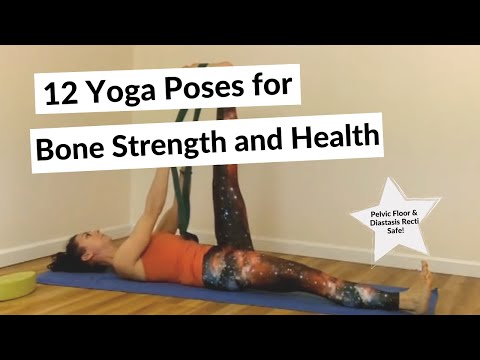 12 Yoga Poses for Bone Health and Strength - Fishman Method for Osteoporosis YogaKendra Fitzgerald · 20:40
 3 Steps to Get Reverse Gate Pose · Daily Yoga Pose LibraryDaily Yoga App · 1:31