Chapters
What is trauma informed yoga?
Practice summary
- Video length
- 2:27
People often ask what the differences are between traditional yoga and trauma informed yoga. Here are some of the key differences.
Transcript
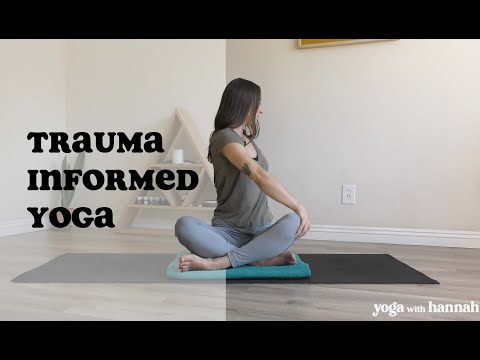
hi everyone so i've been getting a lot of questions about what the difference between trauma-informed yoga is compared to other forms of yoga so there are several differences that i'm going to outrun really quickly one of them is how we cue postures so in trauma-informed yoga we use more invitational language rather than directive language and so the practice becomes more practice of choice for the student in the trauma-informed yoga class this is an aspect that has often been lost in the traumatic experience so yoga trauma-informed yoga is working to bring more awareness to choices that one has in their body in the way they move in the way they breathe so that's one major difference students are encouraged to stay in whatever posture feels supportive to their body throughout the class even if that's doing something completely different than what other students are doing or what i am cueing or the teacher is queueing in the class another key difference is less of a focus on the fitness aspect and the aesthetic piece of the yoga practice so even though there is attention paid to body posture so that students are not doing anything that would injure them the the focus is more on how does the posture feel in the physical body for the individual more than how it looks and less about a fitness practice it's more focused on a breathing practice and a movement so the asanas and the pranayamas parts of the yoga practice the environment is generally as you can see here pretty free of anything that might be potentially triggering to someone who has been through trauma and there is little to no assisted touch so i have cue cards in my classes if students want to place them on their mat if they don't place them on their mat i assume that they don't want to be touched at all through the class to adjust any postures but one side says yes and no so if they do want help with alignment or anything like that they can choose to put a card at the top of their mat that says yes so these are a couple of differences um the focus obviously is different in in a lot of ways than maybe a yoga class you've been to but at trauma yoga therapy.com or instagram page at trauma yoga reach out to me with any questions and i look forward to seeing you soon take care bye
More practice
 What is the Difference Between Trauma Sensitive, Trauma Aware, and Trauma Informed Yoga?Kathie Overeem, PhD
 15 Min Somatic Yin Yoga To Lower Cortisol & Stress · Trauma Informed Hip OpeningYin Yoga With Annie · 17:22
 30 Minute Trauma and Ptsd Informed Yoga PracticeBreathe and Flow · 34:30
 Atlas Trauma Informed Yoga Teacher Training, an essential continuing education certificate program.atlas yoga studio & school · 3:40
 How to Make your Yoga Classes More Trauma-InformedYogaRenew
 Summary and Takeaways from Trauma Sensitive Yoga in Therapy by David EmersonMarble Jar Channel
 Trauma Informed YogaHannah Uiri · 17:19