Chapters
Soothing Yoga for Seniors 50, 60, 70+ · 40-Minute with a Focus on Joints
Practice summary
- Level
- all levels
- Video length
- 40:12
- Equipment
- Energy
- balancing
- Target areas
In this practice
Key teachings
- Joint mobility and health through gentle movement
- Mindful body awareness and listening to your body's needs
- The interconnectedness of the body for balance and stability
Ideal for
- Seniors (50, 60, 70+)
- Individuals with stiff joints or limited mobility
- Beginners to yoga
- Those seeking a gentle and therapeutic practice
Lesson
Instructions
Stiff joints? This gentle yoga program was designed just for you! 1000's of older women have used this video to reconnect with their bodies in their 50s, 60s, 70s or better!
This video used to be a part of our premium yoga for seniors video series. But, for a limited time, as a member of the Sixty and Me community, you can use it for free!
Of course, when it comes to yoga for seniors, or any video course for that matter, the proof is in the pudding. Here is what one woman said about her experience.
"I have only been using this video series consistently since July of 2016 and within a month I felt far less pain. I can sleep lying down flat (which I could not do before), I can walk around the house and my work site without sticks the majority of the time, my posture has improved and my flexibility is greater. What I really appreciate about this series is it goes at my pace. The instructor (Cat Kabira) encourages me to do what I can, a little bit at a time and to have faith in myself."
Have your joints become a bit stiff as you have gotten older? Does gentle yoga help? Let's have a chat!
*****MAKE MORE FRIENDS THIS YEAR!***** *****GET MORE FROM SIXTY AND ME***** Also, remember to check out everything Sixty and Me has to offer here:
Benefits
- Reduced joint pain and stiffness
- Improved flexibility and range of motion
- Enhanced posture and body awareness
- Increased balance and stability
- Calming and grounding for mind and body
Transcript
So our [music] first practice of the series is working with joint mobility which is very important especially as we age the joints start to contract a little bit lose their flexibility and also [music] even gets a little bit of pain. So this series is specifically designed to actually bring some health back into the joints. And you'll find even after doing one practice that there will be a significant difference in how you feel in the joints of your body. So before we even begin the [music] series, start standing with your eyes closed. If you don't have a mat, don't worry about it. You can actually do this without a mat. And for those of you where standing is a little bit of a challenge or maybe you're feeling a little tired, feel free to sit on a chair. You could even do this on a couch, but [music] it would be nice to have a little extra support. So, take this moment right now and close your eyes. And with your eyes closed, whether you're sitting or standing, have your feet on the floor. Really feel the connection of your feet to the ground. and feel with your feet on the floor. Notice your inhale and your exhale and start to lengthen out your inhale and start to get your breath into new spaces in your body. And notice simply by focusing on your breath [snorts] how that calms, grounds, and centers you. And you start to feel your body in a much more delightful and sensitive way. Let's take five more breaths with eyes closed. And if you find it challenging with your eyes closed, you can have your eyes softly [music] open using your breath as a way to connect and turn inwards. Now, beginning with our series, I actually find it helpful to stand off my mat because it's easier for balance. And you may find that even if you're standing, at some point, you may want your hand on a wall if you're outside on a tree or even on your couch. Over time, I promise if you practice this, you'll find that you won't [music] actually need a wall for balance. So start standing on [music] your right foot and we're going to begin with the ankles. So lift your left heel up and just start to roll your ankle around. Put your focus and your breath into your ankle. Start to make circles and just feel because there are going to be little places where it's cracking and a little jagged and maybe you're not making a full circle. So maybe even slowing it down so that you can really start to get more motion and mobility in there and [music] isolate this so it's just your ankle that's moving. and then go into the other direction. And it's interesting how each side feels a little different. You'll notice with the joint series that we'll be doing a lot of different movements. Each joint moves in a [music] different way. So the ankle has a rotation like a 360° [music] rotation. And it also hinges so it moves forward and backwards. Still staying on the same leg. Lift the leg. Inhale. Flex. Exhale. Point. Keep going with your breath. And you'll also notice that you're getting a stretch through your feet. What's pretty cool is that there are more bones in your feet than in the rest of your body. So, if you are familiar with foot massage or reflexology, the entire body [music] can get more health and vitality simply by waking up the feet. So, even play with when you flex, spreading [music] your toes. After your last one, set your foot down and just stand for a moment. Notice if you feel a different connection just from doing that on one side versus the other. Take a breath as a way to feel and connect inside. Now standing on that foot, let's begin the [music] other side and start to rotate your ankle around. [snorts] Each side of the body is different. So you might notice a different connection, a different fluidity here. [snorts] And especially if you're to practice every single day, what's so cool is that the same movements repeated over time will [music] actually feel different because your body awareness will change. Keep putting your mind, keep putting your breath into your ankle. And then go to the other direction. Continue to breathe into your ankle. And you may even notice some sort of stretching as well in your calf [music] muscle because everything is connected in the body. So as you start to bring health to one [music] area, the rest of the body also becomes healthier. And now let's start to flex. So standing on that leg using balance if you need to. Inhale flex. Exhale [music] point. Inhale flexing. Exhale point. Now, as you continue to do this, especially my friends who are not using any walls, but you actually will feel this if you have your hand on a wall, you'll notice that it's not just your ankle that's moving. You're going to feel that stimulation in your feet and your legs. You might even feel support happening [music] in your pelvic floor and your abdominals. So, again, everything's connected. The whole body works together to create this balance and stability. When you're finished, set your foot down and just stand. Breathe and feel what just happened. If you feel a little creaky, if you need to move your body around a little bit, do so. So, everything I'm doing is just suggestions. If you need to shake out, shake [music] out. Knees. Bending your knees. Put your hands lightly on the knees, more to make a connection. You don't want to put any pressure there. And just [music] start to roll the knees around. If this for some reason doesn't feel good on your knees, don't do [music] it. We always want to do things that make us feel healthy and good. So, you can even just pause and have your hands on your knees and breathe into your knees just to make that connection. [music] Change directions. And again, you may notice your feet and ankles also responding [music] as you're starting to bring more circulation in your knees. Now come back to standing chair [music] pose. Take your arms out. Inhale. Sink down into your chair. Take arms up. Exhale and stand. Inhale. Take arms up. Exhale and stand. [music] From the side, it looks like this. So, inhale. So, it's like you're literally sitting in a chair. If you notice, I'm really sticking my [music] pelvis, my butt out to continue to feel the support as well in the abdominals. Now, you can also go at a smaller degree. So, you're just doing like a mini chair and come back up. If it's too much to bring your arms all the way up, you could just keep your arms by your sides. You could take your arms out just [music] slightly. Notice how I'm spreading my fingers. So, every single part of the body counts in these exercises. Let's do one more. Inhale, sinking down. Exhale stand. Take [music] a moment. Pause. Have a little bend in the knees. Softness in the joints. And just feel any sort of sensations, any difference in connection in your body. Okay, moving on to the hips. So, having the hands on the hips, you're just going to start to roll the hips around like you're making a circle. And again, notice if your circle is a little bit uh if you're making more of like an oval or a half circle. So, you really want to start to [music] make a full circle here. What may be helpful is to imagine that you're in a barrel and that you're just trying to wipe your barrel with your butt. And that way you can really start to feel that movement in [music] your hips. Not only is this going to open up your hips, it will open up your hamstrings. It will open up your low back. And just keep your mind, keep your breath in your hips. Go in the other direction. And some days you're going to want to go slow. Some days you're going to want to go a little bit faster. So, just notice what you feel here. That makes the big difference. The more mindful you are as you practice, [music] the more results you'll get. Standing and then just moving the hips, the pelvis forward and back. Now, you might notice, especially if you have a tighter low back, [music] there will be one movement that's more comfortable than the other. So, keep your mind in your pelvis. Keep breathing. One more. And then come [music] back to center. Twisting. Stand with your feet a little bit wider than hipwidth apart. Keep both of your feet planted on the floor. Now, you're just going to start to go from side to side. And put your mind right now on your midback [music] area. And as you shift your weight from right to left, just notice the stretching and the unwinding that happens. Your arms are just flying along as you go. If you need to go a little slower, do so. Still shifting from side to side. Let your head go along for the ride. Now shift your awareness to your upper back. Let your arms swing up and just lightly tap. you can get a little bit more adventurous and kind of hit it a little bit more where you're getting a almost like a massage or a stimulation in your upper back. This is a really great exercise for all of the joints. It really starts to open up. It starts to simulate the synenovial fluid that runs through the joints. And if you were to do one pose first thing in the morning, try this. Now, put your awareness down to your low back and look back towards your back heel. As you do this, you might notice that you feel a different connection when you're putting your awareness on different parts of your spine. You're inhaling to one side, exhaling to the other. Let's do a few more of these. And your hands are reaching towards more your low back. You can even do this if you're feeling really adventurous for five minutes. Now, slowing it down and come back to center. If you need to sit down, sit down. Close your eyes. and feel the sensations. Now feel all that stimulation and circulation [music] happening in the body. Notice the energy that's running through you. This is a great energizing practice. Moving on to the elbow joint. Take both of your arms out. Put your mind in both elbows. Inhale. Draw your hands in. Exhale and straighten. Keep moving with breath. Inhale. Draw in. Exhale and straighten. Now you can keep your hands relaxed so that your awareness is primarily on the elbow joint. Or you can continue to get your hands involved squeezing your hands into fists as you inhale. Exhale. straighten and flex. So, you're also working the joints [music] in your fingers as well as your elbows. Let's do two more like this. Inhale and exhale. [music] And notice your shoulders. Have they come up to your ears as you do this? Keep keep your shoulders moving down away from your [music] ears. Pause. Feel the sensations. [music] notice any difference in your elbows. What's interesting is that there can be tension in the neck related [music] to the shoulders, elbows, wrists, and hands. So, this is a great way to decompress that whole area of the body. Wrists. Just start out with your hands out. Inhale. Spread your fingers wide. Pull fingers towards you. Exhale. And [music] draw them in. Inhale. Exhale. Keep shoulders moving away from your ears. So the wrists are like the ankles where they both [music] hinge, meaning they go kind of like forwards and backwards, and they also have a rotational movement. So take your palms facing down, make your hands into light fists, and just start to roll your wrists around. You can even go one wrist at a time so you can really focus on the opening that's [music] happening because each wrist, especially if you're dominant in one hand over the other, will be a little bit tighter or need a little bit of extra attention. Moving to the other wrist. So, if you're someone who uses the computer, a phone, your hands at all, this is fantastic. [music] Now, if you want to go a little bit more, if this, you can still do what we just did or as you inhale, spread fingers and take your hands to your fingertips and pull your fingers [music] back and really feel that stretch there. Then, as you exhale, pull it back in. There's so many little muscles and bones and tendons in the wrists that really appreciate this kind of stretch and movement. And again, what's so fascinating is how everything is related into [music] the body. So simply by keeping your wrist joints healthy, you may notice a shift in your shoulders and neck as well. Moving to the other one. Inhale. Exhale. Keep your mind on your wrists. Two more. Now you [music] can shake them out a little bit if you need to. The last one for the wrists. Okay, take your arms out. You can sit in a chair still if you need to. Shoulders down your back. Now spread your fingers wide. You're going to notice [music] that they may want to keep a little bit bent. So just feel this. This alone can feel pretty wonderful. And as you keep your shoulders moving down away from your ears, even feel that stretch that's happening in your neck, even the nerves in your neck and shoulders get a little bit more space. Keep breathing into this. If you find that you can't have your arms up this high, bring them to the height that you can bring them. And actually, you're [music] going to feel a different stretch in your nerves and shoulders and neck. So, honestly, play each time a little differently because even taking your arms down a little bit closer gives you a great stretch. Keep spreading your fingers wide. Keep pulling your fingers back towards you. Keep feeling this. And take an inhale into your hands and wrists. And as [snorts] you exhale, reach pinkies out and down. ring finger, [music] middle, index, thumb, and point your knuckles down. This feels amazing on the wrist. Keep shoulders moving down. Keep reaching out through your wrists and your knuckles. Take one more breath and release. Take a breath through your whole body. Notice the sensations. [music] And notice how you feel right now. shoulders. So, just take this moment and put your mind on your shoulders. And as you inhale, bring your shoulders up to your ears. [music] And as you exhale, bring them down. Inhale up. Exhale down. Inhale up. Exhale down. Notice what you feel here. Especially as we get older, the shoulders carry a lot of old tensions. If you're ever on the computer, who isn't these days? [music] If you're driving, carrying things, just by having this putting this attention, this awareness on your shoulders, [music] can start to create a lot of health and change. One more. Now inhale, take your shoulders back, squeeze shoulder blades together, raise them up to the ears. [music] Exhale, draw them forward and take them down. Close your eyes or have a soft gaze. Inhale back, up. Exhale forward and down. So you really want to align your breath. inhaling back up. Exhale forward and [music] down with the movement so that you're continuing to cultivate this mindfulness and awareness in your shoulder joints. Notice what you feel here. If you feel pain, go a little slower, go a little softer, and make it more about breathing and connecting in. You might notice that the shoulders feel different on each [music] side. Observe that. Let's go to the other direction. Inhale forward, up, exhale back, and down. Notice as well if it's a little bit easier in one direction. It feels so good to take [music] the shoulders down away from the ears. You know, especially after decades of stress, we tend to bring our shoulders right up to the ears. [music] And what's interesting is that actually creates in the body a stress response. So, a really great way to decompress and de-stress the body is to keep working the shoulders away from the ears. Finishing. Close your eyes. Take a breath into both shoulders. Really feel that the neck. So, [music] close your eyes for a moment and notice how your neck is connected [music] to the rest of your spine. We tend to think of the neck as something separate. The neck, especially as we age, is [music] a place where there's a lot of tension that collects and [music] neck problems can actually create eye strain and headaches. And it's amazing how just by doing [music] this next series, it will make a huge difference even in how you hold your face, [music] believe it or not. So, if you want an instant faceelift, start to play with your neck as well. So, with your eyes closed or open, just take an inhale and connect your neck like it began at your heart. Notice how that automatically gets you a little bit taller. And we're just going to go from side to side. So, keeping the awareness of your [music] neck connected to your heart. Inhale and turn your head to the side. Exhale, [music] bring it back to center. Inhale to the other side. Exhale center. Inhale and exhale. Come back to center. You can go very slowly and start to sense your neck [music] in relation to the rest of your spine. You can even feel the stability of your feet on the floor, the support of your pelvic floor and low belly. shoulders still moving down away from your [music] ears. Now come back to center and this time just [music] tilt your head down to the shoulder. Inhale up. Exhale [music] shoulder to ear. And come back up. Make sure that you're not taking your shoulder to your ears. You want to [music] keep moving shoulder down away from the ears. Feel the stretch on the sides of the neck as you do this. You may find [music] that there are some days where it's a little tighter in one area and you may want to slow down the movements and focus on that place that's a little bit tighter and to breathe into it. Now coming back to center for the last one. Inhale. As you exhale bring your chin down to your chest. Now, keeping chin along the chest, slowly roll your neck all the way up, shoulders down away from the ears. Exhale, bring it back to center. Inhale, keep the shoulder pressing along the chest. Come up. Exhale, back down. And you can even tilt your ear down to the shoulder as you come up. And really keep your whole mind on the movement and feeling on the neck. And really be mindful because this takes practice to change this habit to move the shoulders down away from the ears. Doing one more. Inhale into the back of your neck and then slowly lift your head up. Now take this moment, [music] close your eyes or soft gaze. Notice how different your neck feels. Notice [music] if it feels longer. Notice if there feels like there's less tension going on in the neck and shoulders. This is something that you can do while you're waiting, sitting in a car, while you're standing in line. Small things [music] make big differences. Now for our final pose, spinal rolling. [music] If you want to have a chair underneath to support you, if for some reason you find that you can't go down as far this time, [music] do so. Again, with practice, you'll notice that the flexibility in your joints increase. [music] So, bend your knees a little bit. Always nice to have softness in the joints. Bring your chin towards your chest. And very slowly roll yourself down. Focus on each vertebra in your spine. So, as you put your mind on your vertebra, as you lower all the way [music] down, let your shoulders and your neck relax. Again, maybe you don't go down this far, but go down as far as you can. And then take a pause here. You can always place something underneath your hands. Inhale. As you exhale, push down through your feet. Draw tailbone towards the floor. and following vertebra by vertebra roll yourself back up to standing. Let your head absolutely come up last. Let's do that again. Inhale. Exhale. Bring chin towards your chest. [music] And then again because you might notice that you want to skip a vertebra. So make sure that you're really focusing on each vertebrae. This spinal rolling is a great way to decompress the whole spine. Some say that what causes us to [music] have the effects of age is simply through the health of the spine. So you could almost experience this as some sort of way to bring more vitality and youthfulness in at different times especially even just different times of the week and especially different times of the day you'll find that your spine is more flexible than other times. I know first thing in the morning my spine can be really tight. So what can be really helpful is to use a chair or your couch or even your bathtub depending upon where you're practicing. So taking your chair and just standing a little further away from the chair. Inhale. Exhale. Bring chin towards throat. And then very slowly roll down. And then you'll notice as you roll down that maybe this is where your edge is. And you really want to go to the soft to medium edge. Place the hands on the chair and just pause here. And as you pause, even pull your front ribs in and draw your tailbone down. This is an amazing way to decompress and stimulate the whole spine. So keep drawing ribs in, tailbone down. If it feels like a little bit of work, it is. So keep drawing. tailbone down, ribs in, [music] and then slowly roll yourself up and continue to roll. Now, the the misconception, of course, is that to be a good yoga practitioner, you're flexible. All of us are actually in some ways more naturally flexible than others. [music] And it can be independent of age. It's just simply how the body is. Of course, with practice, we do become more flexible. But even sometimes [music] with practice, the body doesn't shift as quickly. It's flexibility. [snorts] So, the beauty of the practice is that it's not about achieving something. There's no perfect yoga pose. It's really the practice of listening to your body and really being with where you are in this moment with your body. I find so much delight when I find some point of tension. And I even notice just by bringing my chin towards my chest, even here, there's some awesome tension where I can just start to feel and breathe into it. So, you don't have to go far to get a lot. There's a huge misconception that you actually have to in order to get something out of it or to somehow really do the pose, you have to actually be able to touch your toes. My favorite idea is that the Dollaly Llama does not care how open his hamstrings are or how flexible his spine is. So, it's really about having mindfulness in the body. So, you can continue to come down and have your hands on the chair. Some of you may find that you go down a little bit lower. And [music] that's where even here you can put your hands on blocks or books or just let your arms dangle. and then reaching tailbone down. Pulling pelvic floor and belly in. Roll yourself all the way back up. You're going to feel a decompression in your whole spine as you do this. Taking chin down towards chest. Slowly rolling down again. Let's go a little bit [music] further forward. Again, as you come down, find the chair. Even those of you who can touch your toes, notice if you put your hands on the chair, when you pull your rib cage back and draw your tailbone down, not only do you feel a stretch in your spine, but you feel your abdominal muscles really working. This can be tremendous for the core. And then roll yourself all the way up. For the last one, play with this [music] coming down to wherever your edge is in this moment. Our edges of flexibility change from day to day. And again, what's important is that you're simply making a connection to you. So rolling all the way down, feeling the decompression of every single vertebrae. It feels amazing when you really notice each vertebrae. When you come down to your edge, you can play with tilting your sitbones up towards the ceiling. And again, even just finding your sitbones and feeling for reaching that back up can create a tremendous opening and flexibility. And then when you keep your knees bent, [music] reach your tailbone down towards the ground. and slowly roll yourself up. Let your head come up last. That feels awesome. So you can That's one if you wake up and you have like 3 [music] minutes to your time, do that one because that is a great way to decompress, get all that synenovial fluid running through [music] your joints and to get taller. For the final practice, shabbasana, you can lay down or you could sit in a chair, preferably lying down. So lay down on your back. And this is where you may want to have your knees bent. You may want to slide a bolster or pillows underneath your knees. Make sure [music] that you have space around you and your palms are facing upwards. If it feels more comfortable, you can place a hand [music] somewhere on your body. Each time you'll notice that you'll practice your [music] shavasana or deep relaxation differently. Check in with your neck. You want that natural curve in your neck. So you can bring your chin down towards your chest and then lift it up. Find that neutral position. Close your eyes. With eyes closed, scan your whole body from toes to head. Notice the sensations in your body. Allow your forehead [music] to relax, back of [music] head, crown of head, left ear, right ear, left temple, right temple, back of neck, your whole left shoulder, your whole right shoulder. Feel your entire spine relaxing and softening. Your whole left hip, right hip, left thigh, right thigh. The whole of your left knee, whole of right knee. Both ankles, both feet, both hands, all t fingers, left wrist, right wrist, left elbow, right elbow, both arms, your whole body relaxing, allowing your entire nervous system, your whole body to soften and relax. Almost like you're about to go to sleep, but you're still aware of the sensations in your body. Please rest here for as long as you would like. This is a great [music] way to integrate and nourish your entire body.
More practice
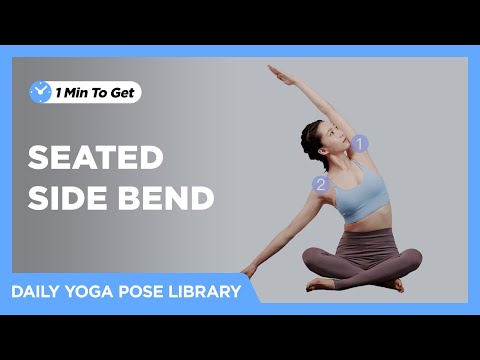 1 Min to Learn Seated Side Bend · Daily Yoga TipsDaily Yoga App · 1:40
 10 Minute Evening Yoga for Better SleepYoga With Bird · 12:43
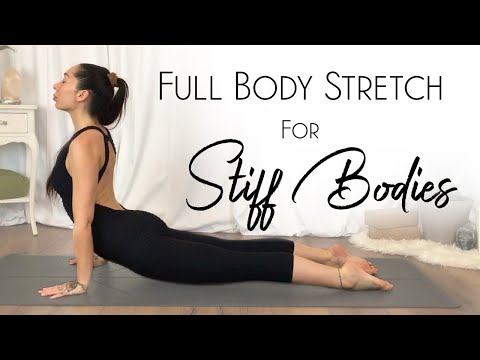 10 Minute Yoga Full Body Stretch for Stiff BodiesYoga With Bird · 10:17
 10 Minutes Traditional Pranayama Techniques Must Do Everyday · Breathing TechniquesThe Yoga Institute · 5:49
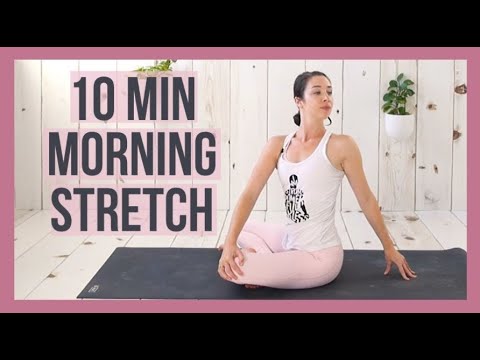 10 min Morning Yoga Stretch for Beginners - Energy Boost YogaYoga with Kassandra · 13:30
 10 min Yoga for Beginners - Gentle & Simple Yoga StretchYoga with Kassandra · 13:44