Yoga Decoded: Yoga terms explained: Drishti, Third Eye, Crown and Ujjayi breath
In this series we uncover the words that are not often explained in a class. With lift the veil of uncertainty and demystify the terms.
Transcript
hey welcome back guys I'm down with Doug thanks again for joining me today we're starting a new series called yoga decoded where I take the most popular phrases cues and words that I heard in a yoga class that maybe you have no idea what they mean and I'm gonna be honest with you I'll level with you sometimes I don't know what they mean when I hear teachers saying them so this is a great place to find out what exactly do we mean in that class join me back we'll be going through the first episode of yoga decoded [Music] so for this first episode we are going to be looking at just the head there's too many queues to do the whole body so I thought I'd sub categorize it in this way starting at the top working our way down so number one the crown of the head sometimes you hear teachers say extend the crown of your head forward when we say the crown of the head we just mean the top of your head sometimes I queue this in something like extended side angle and I'll see the students start to look towards me what we're looking at is just this elongation it's very subtle movement but basically in yoga were often looking for things to pull in two different directions and the subtlety of extending your head up even as I'm sitting here if I extend my head up the rest of the body seems to follow so if we root down has to extend the crown of the head up we get that lovely pulling sensation pulling herself in to two interactions which in essence is stretching and us exploring the full range of our movement and the space that we take up so crown of the head just the top and when we extend it we literally lift ourselves up as if there was a hook in the top of our head which is a horrible sounding description and we've been pulled up by that point number two the third eye now in your classes you will be requested to look at focus on or even bring your thumbs to your third eye and you might be thinking last I checked only at two eyes well you are correct but there's two answers to this question of what is or where is the third eye one is more a mystical energetic sense and the other is warp a biological sense if we look at the mystical and energetic sense the idea is that this is your Arjuna chakra the chakra of enlightenment where we see our connectedness to the whole universe that by looking in we can see the real truth that it may be different to the visual truth that we see all around us now keep in mind that this is something's been passed on from many cultures around the world including the ancient Egyptians who had Horus the all-seeing eye and something you might still see if you into conspiracy theories and the Illuminati this idea of illumination obscene things as they truly are the chakra is really the idea is that we can see and find ourselves in this enlightenment if we can stop seeing ourselves as just this physical being so that's the energetic sense and it does have some weight when we start to think about things in a biological sense in that wavelengths that we can see are quite limited our eyes can only see your range say this big where the range of scope of wavelengths is much bigger now don't quote me on this proportions I'll put something up here to let you know exactly what that is but there is some truth in the fact that there are things happening around us all the time that we may not necessarily be able to see doesn't mean they're not happening you know the absence of us be enough to see them doesn't mean they do not exist absence of evidence isn't evidence of absence that's what I was trying to get to also keep in mind that that pineal gland exists in the brain in a very similar place to where the energetic sense people like to think of the third eye so a pineal gland if you think of a pinecone where it gets its name is very similar to the shape of an eye so the idea of the third eye can also relate to this pineal gland and the main function of this gland is to release melatonin which give us our circadian car circadian rhythm circadian rhythms turns out what circadian circadian rhythms why does that word forsake me yeah got it all right they give us our circadian rhythms which provide all sorts of things and a lifestyle but mainly our sleep and if things are balanced in our life so this idea that the third eye either if you believe in this pineal gland which you should because it exists or you believe in this energetic sense it does have some bearing on your life so we take time we look towards that thing so where is it well for both senses it's between the eyebrows in the forehead as we open up the third eye it kind of engrosses the entire forehead and that's where we think so if teachers asking you to look towards your third eye with the eyes closed you kind of focus your attention inward and upward and if you bring your thumbs to your third eye you bring it just there between the eyebrows okay I hope that is answer your question in a very long and convoluted way colleagues about that and I will remember circadian rhythms number three Yogesh three point now this is something that comes up a lot in class and actually in psychology if you listen to John Peterson he talks about it quite a lot too in a different kind of way it has levels you know it's like a cake well like an onion it has layers you can think about in the very physical sense your Drishti point your focal point where you look so in warrior two first is your armadas in front of you you look towards your ring finger of the front hand that's your Drishti point that's your focal point where we look it really dictates where we go the head is very heavy so looking left or right can change the weight distribution of the body it also lets us know where our body should be turning so for you in a twist maybe we're starting to look to the way we go if you're in any sort of open posture where you're going for extend side angle you're looking up and underneath your hand or maybe towards the hand that's over the top these all have a bearing on what happens to the rest of your body so the Drishti point is very important in down dog we're looking back at our own navel that we're not gonna affect on the spine and the whole structure of the body so the high is even though they're so small very how can I say influential on how the rest of the body reacts the same can we said metaphorically our Drishti point our focal point in life will dictate where we're going where are we aiming and for so many of us if we don't take the time to actually plan and think about where is our life aiming we may get up there mindlessly and find ourselves in a place where we don't necessarily want to be so this Drishti point is very important and when we talk about in class practically we're talking about your focal point but may more metaphorically we're talking about where is your focus in life all right we also want to have a very soft focus when we say Drishti we're not asking you to narrow your eyes really focus on something we just asked me to set your gaze upon that thing so you can focus a little bit better so in 4/4 may be looking towards your toes but you're not squinting at them not trying to really take it in you're just looking at where it is you want to go by doing that we send an intention and we go towards that intention whether it's in our life or in our post number four as we move our way down the edge ie breath so UGI breath just means victorious breath and it's a way of heating up the body with just the use of the breath and the constriction of that so quite often in the class we'll ask someone to come into their victorious breath or they lose a breath and a lot of people struggle with this and we don't really have the time of class to always teach it as we should but we have to move on so just to know what that is if you breathe in through your nose and out through your mouth making it a chase on like you're fogging up a mirror of any description then that exhale they're forced XLR H a sound is what we're doing but with the mouth closed so I want to breathe in through the nose and out through the nose I'm when strict in the back of my throat slightly so that less air can get through I'm increasing the pressure of the air coming through and it makes a sound kind of like snoring but not exactly the same it's just a more audible sound to your breath it has a couple of functions one notwithstanding being the fact that they heat you up very quickly in your body which is great if you're looking to get this prana this lifeforce this energy or you just want to heat up your body to get deeper into your practice if you just believe in the biological sense it can be very useful this sound can also be quite meditative meditative I hope you struggle with the words today as the sounds almost like an ocean as the waves come in and now and again that gives you a nice focal point to focus on during the class is that breath okay and if you can hear it it's much easier to keep tabs on whether the breath is trying to get labored or forced under breathe through our mouths or it's going too fast so there you have it the first four terms of yoga decoded hope you enjoyed it if you did make sure you smash the like and make sure you comment below if there's any other terms that I've missed out that you want to hear about I'll do my best to cover that actually no oh into my best we'll bloody well do it I'll give you what you want so do put in the comment section below until next time I'm down with Doug you've been awesome what see you soon [Music]
More practice
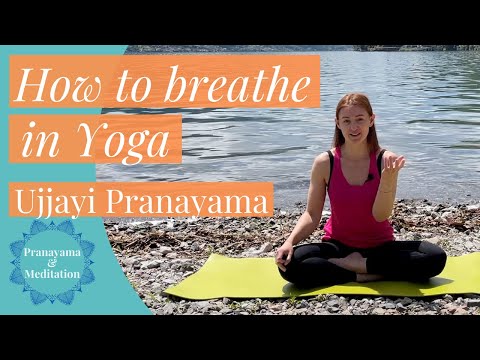 Ujjayi Pranayama breathing · Breathe like that during Yoga Practice! · Victorious BreathYoga with Ekaterina
 : Ustrasana or Camel Pose · Light on Yoga Asana (Yoga Pose) Explained by a Yoga Teacher ExplainedValerie Brett
 : Gomukhasana / Cow Face Pose 🐮 BKS Iyengar Light on Yoga Asana Explained by a Yoga Teacher 🐮Valerie Brett
 5 Kleshas explained: How Yoga Philosophy Helps You Break Free from SufferingUnchanging Being: Yoga Philosophy for Freedom · 15:53
 Abhyasa and Vairagya: The Key to Mental Mastery · Patanjali Yoga Sutra 1.12 ExplainedYOG ASANA · 8:54
 Advanced Backbend Variation - Explained For Basic to Advanced Level Yoga PractitionerYograja
 Ashtanga Yoga - The Perfect Path of Yoga - Eight Limbs and Yoga Sutras by Patanjali ExplainedElemental Forms · 21:20
 Breath Practice FOR Anxiety · Extended Exhale BreathThrive Somatic Yoga