Chapters
How To Do Adho Mukha Svanasana · Downward Facing Dog in Ashtanga Yoga
Practice summary
- Level
- all levels
- Video length
- 7:23
- Equipment
- Energy
- balancing
- Target areas
In this practice
Key teachings
- Ashtanga alignment principles for foundational poses
- Understanding the role of bandhas (energy locks) in Downward Dog
- Safe and effective practice of Adho Mukha Svanasana
- Traditional vinyasa cues in Ashtanga Yoga
Ideal for
- Ashtanga yoga practitioners of all levels
- Those looking to refine their Downward Facing Dog
- Beginners learning foundational yoga poses
- Students interested in subtle body work like bandhas
Lesson
Instructions
With Downward Facing Dog showing up so regularly within the Ashtanga practice, understanding how to find your perfect alignment will help you practice it safely every time you step on your mat.
In this tutorial, we’re discussing ADHO MUKHA SVANASANA / DOWNWARD FACING DOG POSE, a foundational pose in Ashtanga Yoga. You’ll learn the traditional vinyasa cues as Jelena demonstrates how to meet the asana coordinates as practiced in Ashtanga (which can be different from other yoga traditions). We go over key alignment principles that keep your body safe and allow you to go deeper into the pose and explain why it’s the perfect opportunity to explore bandhas in your practice. You’ll understand how to determine the distance between your hands and feet, how to position your arms and shoulders, what movements to look for in your back, and what to do if your heels don’t touch the floor.
WHAT SHOULD WE MAKE NEXT? 🎥 Want to see more tutorials like this? Want tips on a pose that you don't see in our library?
❗ Let us know in the comments and we'll make a video for it!
🔹 ASHTANGA TUTORIALS 🔹 Guidance on BREATH and ALIGNMENT 🔹 Tips to help you tap into a more YOGA-FOCUSED LIFESTYLE
Videos range from quick 5-10 minute lessons to longer, full-length led classes (for ALL levels of experience!) to help you begin, maintain, and/or deepen your Ashtanga practice.
JOIN OUR FREE COURSE 🧘♂️ Get *lifetime access to Meditation in Asana*, our FREE 7-lesson course that guides you in developing more self-awareness and connection in your practice. Sign up here →
WANT OUR YOGA MAT? SAVE 10% on any Liforme mat with our code: DAVIDANDJELENA →
WATCH THESE NEXT 💻 🔹 How to do Urdhva Mukha Svanasana | Upward Facing Dog in Ashtanga Yoga Ashtanga Alignment Principles 🔹 How to do Chaturanga Dandasana | Four Limbed Staff Pose in Ashtanga Yoga 🔹 How to do Surya Namaskara A | Sun Salutation A in Ashtanga Yoga
DEEPEN YOUR PRACTICE WITH US 🙏 🔹 Ashtanga for Beginners → 🔹 Primary Series Intensive → 🔹 5 Days to Float → 🔹 All David & Jelena Yoga courses →
STUDY WITH US IN PERSON - WORKSHOP & RETREATS 🌎 🔹 View our entire schedule →
STAY CONNECTED 👋 🔹 David's Instagram: @davidrobsonyoga 🔹 Jelena's Instagram: @vesic_jelena
Benefits
- Improved body awareness and connection in foundational poses
- Reduced risk of injury through proper alignment
- Deeper understanding of Ashtanga yoga methodology
- Enhanced core engagement and pelvic floor strength
- Increased flexibility in hamstrings, calves, and Achilles
Transcript
[Music] hi i'm jelena and i'm david and in this tutorial we're going to look at downward facing dog aro muka doesn't even have a name actually in downward face in ashtanga we just call it shat which is the sixth vinyasa of the suryana maskara but it does have a name in yoga tradition downward facing dog so every tradition has a different set of coordinates different ways to do it we're going to show you what ashtanga's coordinates are and then we're going to also go over some key alignment principles that will keep your body safe and let you go deeper into the post and if you like it and you want to see more you have to and if you like it you want to let us know you have to comment if you don't like it you don't need to comment don't worry and if there's something else that you'd like to see please comment let us know we will make a tutorial on it okay ready all right so uh how do we figure out what the distance is for the feet to the hands in downward facing dog yelling knows the answer it's determined by chaturanga chaturanga the fourth vinyasa of the sun salutation when we jump back and lower down so this places the hands and the feet at the correct distance that if we were to push straight back we're in the perfect downward facing dog that's the right distance now yellen is quite flexible you know obviously so she can get her heels down on the floor you might not get your heels on the floor in that position what should you do well you don't really have to do anything you could just keep your heels up in the air and you know hope for the best you could walk your feet in but that's going to change the shape of your downward dog quite dramatically so i would recommend just keeping the heels up and feel the stretch in the hamstrings or the calves or the achilles whatever limitation you feel is stopping you from getting the heels down i don't think that my heels came down when i started doing this practice it took quite a while so over time you will eventually get them thought on the mat hands are shoulder width apart and the index fingers are pointed forward and the arms um are rolled out not in right she's externally rotating her upper arms and reaching from the scapula here so her shoulder blades we don't want them to depress down the back we want them to elevate to come up towards the head you often hear the cue shoulders down in downward facing dog so i don't know if that's a good idea you can see that creates a lot of tension a bit of a tangle up in the upper back we want to feel like we're reaching from the arms from the shoulders from the scapula letting them slide up the back as we press the weight back towards the heels so this is a really key movement it's going to come up again and again in your ashtanga practice downward dog is the place where you get to perfect it external rotation and elevation of the scapula one of the things that you'll notice when you do that when you reach through your shoulders is one first the impingement that happens from trying to push your shoulders down disappears and then you start to feel this really nice stretch on the whole sideline of your body as you reach through the shoulders but one thing that you'll need to be aware of when you start to reach with your arms and reach with your shoulders you might influence your upper body one of the easiest way for us to get shoulder flexion is to arch the spine you know to extend the spine tip the thoracic back to get the arm up by the ear yelena is not trying to come into a back bend here when she contains the ribs you'll see the back gets flatter and actually that's going to contribute to the lift that we want to find here that flattening by pulling the front ribs in and then coupled with drawing the tailbone and sits bones down you can see that the sacrum is going to puff up and this might be unique to ashtanga yoga that we get this roundness in the lower back here and really where that lift is coming from is here you get this hollow shape right in the lower belly thighs are pushing back and that hollow that's urinabanda the lifting up lock coupled with a mulabanda the root lock so we're not extending kind of doing a backbend or an anterior tilt we're going into a slight posterior tilt sits bones tailbone draw down towards the floor and that creates that lift here but really the lift is in the front of the body so yelling has got this beautiful hollow shape here like a skinny little dog doing uh you know that stretch and their their belly pulls in i guess that's that's the point a downward facing dog yeah yeah so uh all of these cues will take you i don't know if they'll take you deeper in in the sense of um the way it looks but definitely you're gonna feel a lot more connection and work through your body and i think that kind of connection takes you deeper into your practice over time one of the things you notice again is that there's this shift of the weight towards the back so you don't feel like your poor arms are doing all the work and trying to hold your body but the weight is being shifted back as you get your legs more engaged and you get your pelvic floor more engaged one thing about downward facing dog that i like to emphasize is that this is a perfect place for you to start exploring these mysterious bandas that you hear yoga teachers talk about quite a lot or simply put your pelvic floor so when you are in downward dog i want you to start thinking about lifting through your lower belly and it feels like you're lifting up like you're squeezing and holding your pee and you start to feel that it's again coming to this really low point in your belly somewhere halfway between the belly button and pubic bone and this is the magic spot this is the spot where you start to connect your upper body with the lower body and you feel this vacuum-like sensation now this is something that you use to then carry forward it is easy to find it in downward facing dog and as we move through our practice and later on downward dog is something that we come back to as part of vinyasa over and over again you use that as a reset to remember to lift and hold it's kind of the secret to floating strength if you look through our tutorials we'll talk about that as well all right so i hope you found this interesting and of course if you liked it let us know by liking it giving us a comment and subscribing to our channel see you soon
More practice
 How to do Padmasana · Full Lotus PoseDavid and Jelena Yoga · 18:21
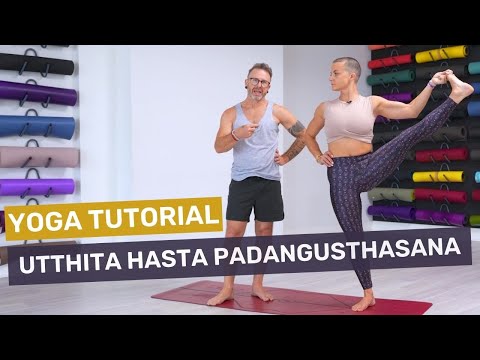 How to do Utthita Hasta Padangusthasana · Extended Hand to Big Toe Pose in Ashtanga YogaDavid and Jelena Yoga · 11:43
 Hormonal Yoga Therapy · a complete practice for hormonal balance · Happy Hormones - Happy YouYoga is You - Shakti & Maheshwara Lehner und Team · 1:20:02
 How Do I Choose The Right Yoga Style For Me? - Hindu Enlightenment JourneyHindu Enlightenment Journey · 3:20
 The Principles of Yin Yoga - Philosophy & Practice of Yin YogaYoga with Kassandra · 9:31
 "How to Store Shukra Dhatu: 3 Easy Methods with Ayurveda and Yoga" @healthy bodiesSarkari schemes Updates · 5:24