What Is Pranayama? · Yoga Teacher Training · Anvita Dixit
Practice summary
- Video length
- 9:01
Our breathing gets impacted by what we do externally, and so if we impact the breath flow directly - we can impact how we behave externally as well!
🧘🏽♀️Join Our Yoga Classes -
💫 Join Our YouTube Membership -
🙏🏼 Support Our Channel -
🙏🏼 All things Yoga, philosophy, and spirituality. Yogic Gurukul aims to provide online Yoga education through videos, books, and workshops - all centered on classical Yoga philosophy and Indian culture. We believe that the spiritual teachings of Yoga are an essential human need and help us to know ourselves from the inside out. To us, Yoga is much more than just a physical asana practice - it is a mental and spiritual process - catalysed through philosophical study, meditation and pranayama. Our aim is to teach a holistic Yoga practice, and be able to transfer the knowledge of Yoga as presented in the Vedas, Upanishads, Bhagavad Geeta and Hatha Yogic Texts.
🧘🏽♀️ Founder - Anvita Dixit (@anvitadixityoga)
➡ Email: info@yogicgurukul.com
🙋🏻♀️Video Editor: Ashlesha Mahadik - 🙋🏻♀️Graphic Designer: Maitreyi Bhatia -
The video content, information, and teachings brought to you by Yogic Gurukul have been created to spread awareness on Yogic practices and the impact of each practice or philosophy will be different for each person. Please seek medical assistance before starting any of our videos and ensure that you are fit to practice with adequate sleep and nutrition. Yogic Gurukul does not take responsibility for any results of the practice.
Transcript
hi guys this is me the Duke and today we're going to be talking about pranayama and the special features of pranayama so last week we looked at meditate about sense and we understood why those form the basis of all pranaam ik practices and also of every single high OD practice now this week the aim is to understand where pranam comes from what are the special features of pranayama and how you can involve time in your own daily yogic practice so first of all what just ran I am mean so prana has made up of two key words prana as well as I am now prana refers to a very subtle life force that is sort of like an interface between your body and your mind and this subtle life force develops itself in physical realities as the breath so that is your prana and I am is the control or the retention of something so these two words prana and ion combine together to mean that pranayama is the control or the retention of your breath and that is basically a plan a means now most of us think that breathing is a very involuntary process but Indian Yogi's back to the fore because they believe that program can be through pran I am breathing can be made a sort of voluntary process and how this is done is that there are certain locks and bundles that we enable in our body to make the breath flow in a certain direction and to kind of observe how much breath is going in to our body at what amount of time so how we do that is really essential and is the key the different shapes plan I am from any other yogic practices now one of the reasons we actually practice pranayama is because it has ear effects of behavioral change in ourselves and it leads us towards subtler understandings of who we are so for example when you are doing something stressful or you're lifting a very heavy object or you're doing anything that puts a stress on your body and mind your breathing becomes faster and you go into panic mode or are the fight-or-flight mode and your autonomic nervous system kick starts but when you really calm and relaxed when you're doing something that is not stressful for you you will notice that your breathing is slow it's also very deep now if our breathing gets impacted by what we do externally then we must understand that if we impact our breathing directly our external body functioning will also be impacted so that's why Indian Yogi's decided to master the art of breathing and then in turn master the art of being and of behavioral change so that is the point and the purpose of pranayama now a few things to keep in mind while practicing pranayama number one you need to be sitting in a meditative posture now a meditative posture is basically one where you form a triangular base with your lower body and you keep your upper body erect and form sort of electric circuit that allows you to enhance your own inner energy to the highest if you are confused about one meditative postures are please refer to my previous video where I've explained and described meditative postures in great detail now the next thing that you need to keep in mind is that there is a ratio to the breath and the way that you breathe now this ratio is in terms of your inhalation retention and exit bread okay in Sanskrit this inhalation is called poo rock your retention is called goong-bok and your exhalation is called rate shock so these are the three sons with words and I'd really appreciate it if you try to keep these in mind and refer to them because that's really where yogic knowledge came about from and it's important to keep those words in mind as well so pulak come back and reach up and the ratio that we need to perform these programming practices to is 1 is to 4 is the - alright that's 1 is to 4 is the - so that means if you're counting it in seconds then you inhale for 1 second pause for about 4 seconds and exhale for 2 seconds so that is the ratio that you need to maintain in your prior amic practices now when we actually perform those in our video tutorials you see what I mean by retaining the breath for that much time because in program the retention of the breath is what matters the most and that's really where all the magic happens so this ratio is extremely important one is to fall is the - the next thing that you need to keep in mind is that pranam have has certain locks that we create in our own body for example in you je prana and we create a lock with our glottis and so we kind of control the quantity of air that we are breathing in and in Granberry we kind of close our five senses and so we control again the manner in which were breathing and performing to an ion so there are certain locks in the pranaam ik practices but those are again for a much higher stage of tran I am you wouldn't practice it necessarily in the initial stages so these are the three key concepts you need to keep in mind that first of all you need to be in a meditative posture secondly you need to keep the ratio in mind and thirdly there are banthas and locks involved in your prana attract but these are slightly more complicated and they should be done only under the guidance of an actual teacher and a guru because there are chances of you not doing it correctly and then harming yourself because of the incorrect practice so those are the key points to keep in mind now certain textbooks have described on I am in different ways so the certain ancient Sanskrit books that talk about ran I am our Patanjali Yoga Sutras Hatillo pradipika kiran samhita and also the textbook called shimmer Samhita now these books talk about prana in certain different ways both Patanjali and Oprah Deepika explained that arsons should be done and mastered first before moving into the practice of pranayama the reason is that when you're doing an arson yours in a static movement and you're still focused on your breath but when you're on I am you're even more in a static state and your entire attention is on your breath so you really need to be able to master the Arcana practice to then be able to move into pranayama however certain primary practices like anulom vilom family can be introduced while you're learning and mastering your asana practice as well so these are the key concepts that Patanjali Hatillo pradipika talked about and then Kiran sometta enlighten us about Nadi's which are basically the channels invisible channels in our body that are used to transfer this breath right so that's similar to how our nerves function but it's specifically for the movement of the breath and it's called Nadi's it is believed that our body has 72,000 Nadi's and that is what has been written in the ancient indian scriptures and lastly also Pradhan allows you to affect and to have a Kundalini awakening like we discussed in the previous videos Kundalini sort of a very sacred essential life force that is situated at your perineum region and if it gets activated you have a surcharge positive energy or energy rather within your body that you can use and work with so this panoramic practice also taps into the awakening of the Kundalini energy and allows you to move forward on your spiritual journey so that is really the essence or sort of in a nutshell what prana is all about again this is a very theoretical perspective of what pranaam is and next week we'll be looking at the eight different varieties of pranayama once we understand those varieties with program will actually begin to practice them and to see how we can do them but as always my advice to you would be that as much information and as much knowledge as you can gain from online platforms please do take it all in but definitely approach an offline yoga instructor or a credible trainer to help you with mastering this practice because these are very very subtle sciences and if you only do it online it will not give you maximum benefit it is very important therefore to actually approach Yoga Institute anyone that's in your area any yogurt store up to that you trust and is credible please go to them and also master the art and this practice so here were just giving you a lot of information hoping that it helps you but we expect you to also go out and look for an offline yoga class and then imbibe the practice through that so I hope this video has helped you understand the basis of pranayama and next we are going to look at the eight classical varieties of prana as described in the ancient Indian text books until then keep blasting
More practice
 Ashtanga Yoga - 8 Limbs of Yoga · Yoga Teacher Training · Anvita DixitYogic Gurukul · 10:26
 Patanjali Yoga Sutra 2.47 - How To Do Asana · Yoga Teacher Training · Anvita DixitYogic Gurukul · 10:37
 Patanjali Yoga Sutra 2.7 - What Is Raga? · Yoga Teacher Training · Anvita DixitYogic Gurukul · 4:58
 What Is Yoga? The True Definition Of Yoga · Anvita DixitYogic Gurukul · 8:24
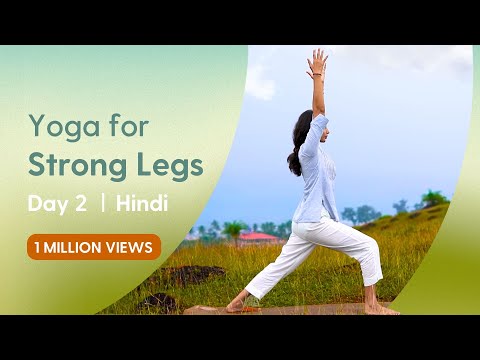 15 Min Yoga for Happy, Healthy Legs · Day 2 of Beginner CampSatvic Yoga · 17:52
 30 Minute Trauma and Ptsd Informed Yoga PracticeBreathe and Flow · 34:30